The Fed’s aggressive interest rate hike is more than a "hard landing" risk.
Xinhua News Agency, Washington, September 21st (International observation) The risk of a "hard landing" is not only aggravated by the Fed’s aggressive interest rate hike.
Xinhua News Agency reporter Xiong Maoling
On the 21st, the Federal Reserve announced that it would raise interest rates by 75 basis points, which is the third time in a row this year. The Federal Reserve reiterated its determination to fight against high inflation and was wary of the serious consequences of premature monetary easing.
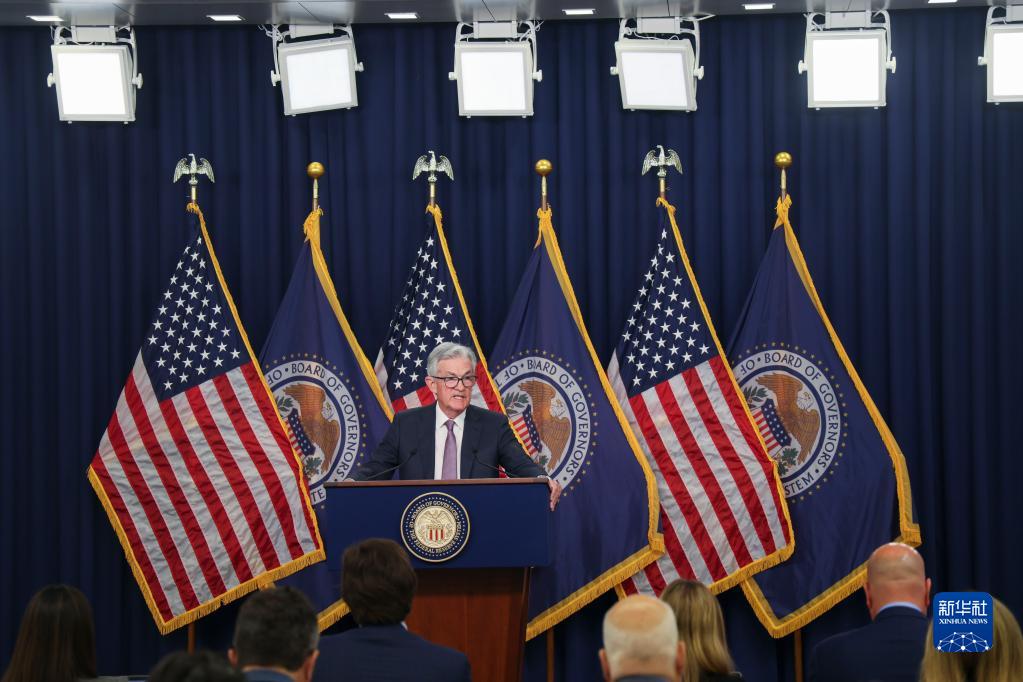
On September 21st, US Federal Reserve Chairman Powell attended a press conference in Washington. Xinhua News Agency (photo by Alexander Norton)
The Federal Reserve has raised interest rates by 300 basis points since March this year, which has led to a significant cooling of the US real estate market, stock market turmoil and a significant slowdown in economic growth. Analysts believe that the inflation situation in the United States is still grim, and the Fed’s continued aggressive interest rate hike policy may push up the unemployment rate, aggravate the risk of "hard landing" of the economy, and bring greater risks to the world economy.
The path of raising interest rates is more hawkish.
When Federal Reserve Chairman Powell announced in June that the Fed had raised interest rates by 75 basis points for the first time in 28 years, he said that raising interest rates by 75 basis points was unusual, and it was expected that such a rate hike would not occur frequently. However, after the two-day monetary policy meeting on September 21st, the Federal Reserve announced that it would raise the target range of the federal funds rate by 75 basis points to between 3% and 3.25%, which is the third time in just a few months.
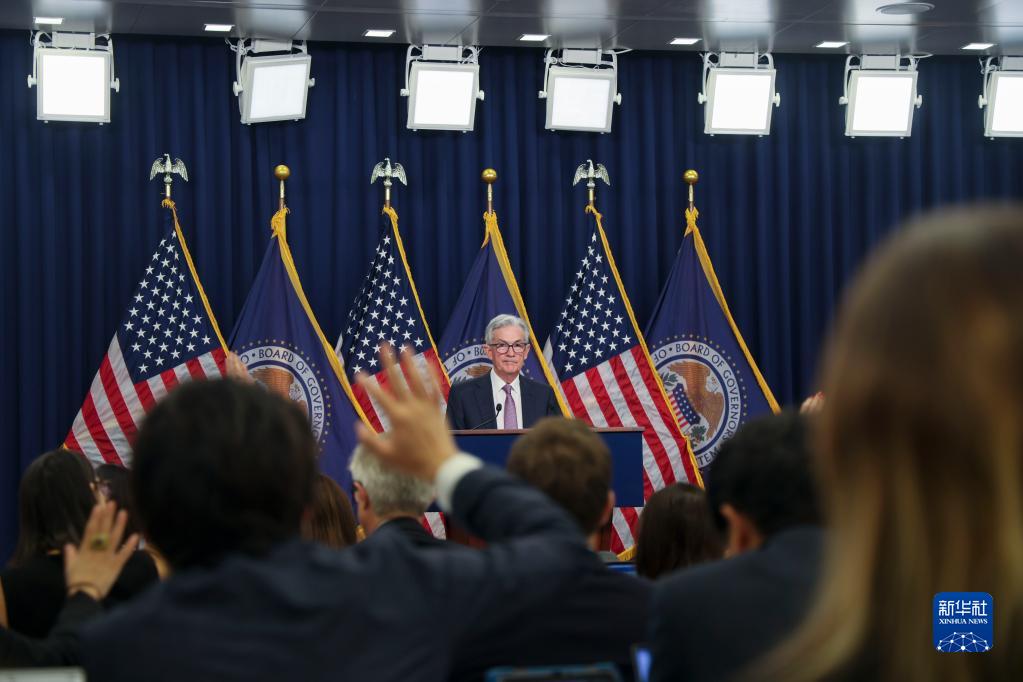
On September 21st, US Federal Reserve Chairman Powell attended a press conference in Washington. Xinhua News Agency (photo by Alexander Norton)
On the 21st, Powell reiterated the hawkish signal he released in late August, that is, he emphasized the determination of the Fed to reduce inflation and was wary of the serious consequences of loosening monetary policy prematurely and allowing high inflation to solidify. He stressed that if the Fed retreats from its commitment to reduce inflation, people will eventually suffer more and longer.
According to data from the US Department of Labor, since March this year, the US consumer price index (CPI) has increased by more than 8% year-on-year, maintaining a high level.
According to the latest quarterly economic forecast released by the Federal Reserve on the same day, the median forecast of the federal funds rate by Fed officials at the end of this year is 4.4%, which is significantly higher than the forecast of 3.4% in June. According to the current situation, the Fed will need to raise interest rates by about 125 basis points in the next two meetings to reach the forecast value. Officials’ median forecast for the federal funds rate at the end of next year is 4.6%, higher than the forecast of 3.8% in June.
Jay Bridson, chief economist of Wells Fargo Securities, said in an analysis report that the Federal Reserve further intensified its efforts to fight inflation at its September meeting. Although it raised interest rates by 75 basis points as expected, it gave a more hawkish path forecast for the short-term interest rate trend this year and next.
According to the Chicago Mercantile Exchange’s "Fed Watch Tool", as of the evening of 21st, the probability that traders expect the Fed to raise interest rates by 75 basis points in November exceeds 70%.
The economic outlook is becoming more pessimistic.
Some experts believe that the 75-basis-point interest rate hike by the Federal Reserve seems to be the "normal state", which may push up the unemployment rate, puncture the bubbles in the property market and the stock market, push the US economy into a "full-scale recession" and bring greater risks to the world economy.
Desmond Rahman, an economist at the American Enterprise Institute, told Xinhua that in order to control inflation, the Fed has continuously raised interest rates substantially, while reducing its balance sheet and recovering market liquidity at an unprecedented rate. He believes that the Fed’s monetary policy is too radical and insufficient consideration is given to the impact of policy lag, which may lead to an increase in the unemployment rate.
According to the quarterly economic forecast, the median forecast of the US unemployment rate by Fed officials in the fourth quarter of 2023 is 4.4%, 0.5 percentage points higher than that in June. The median forecast of the year-on-year growth rate of the gross domestic product (GDP) of Fed officials in the fourth quarter of this year is 0.2%, which is significantly lower than the forecast of 1.7% in June and 2.8% in March, reflecting their more pessimistic expectations of the US economic outlook.
Powell said frankly that in the process of curbing inflation and restoring price stability, it will be very challenging to achieve a relatively moderate rise in unemployment and a "soft landing" of the economy. He said that if monetary policy needs to be further tightened to a more restrictive level, or the tightening needs to last longer, the possibility of a "soft landing" will be reduced.
Dean Baker, a senior economist at the Center for Economic and Policy Research in the United States, believes that the Fed should pay more attention to the downside risks of further tightening policies, that is, pushing the already battered US economy into recession.
Jeffrey gundlach, CEO of American Double Line Capital, said in an interview with CNBC that the Fed should slow down the pace of raising interest rates because the economy is on the verge of recession. According to a recent CNBC survey, respondents believe that the possibility of a recession in the United States in the next 12 months is 52%.
Rahman said that the Fed’s tough monetary policy stance has made the real estate market experience serious difficulties, and also led to the bursting of the stock market and credit market bubbles, which made him worry that the US economy would soon fall into a "full-scale recession". In addition, the Fed policy has also led to a sharp appreciation of the US dollar and the return of capital from emerging markets, which has made the already very difficult world economy worse.