What do the lights and signs on the runway mean?

The traffic flow of the airport is increasing, at the same time, with the continuous expansion and complexity of the airport, the taxi route has become more complicated. In any busy airport, aircraft or ground vehicles may use or shuttle on the runway at all times, and most of them are in safe operation. However, under accidental circumstances, many factors increase the risk of errors. Any mistake may lead to runway invasion.
This manual is compiled according to the FAA Safety Guide for Pilots’ Ground Operation and the relevant requirements of the ICAO Runway Intrusion Prevention Manual. It can be used as a reference for pilots as well as controllers and ground vehicle drivers. This manual does not cover all the contents of ground safety, but mainly focuses on the following five important aspects in ground operation:
Ground operation plan
Taxi program
Aircraft lighting
communication
Airport signs, signs and lights
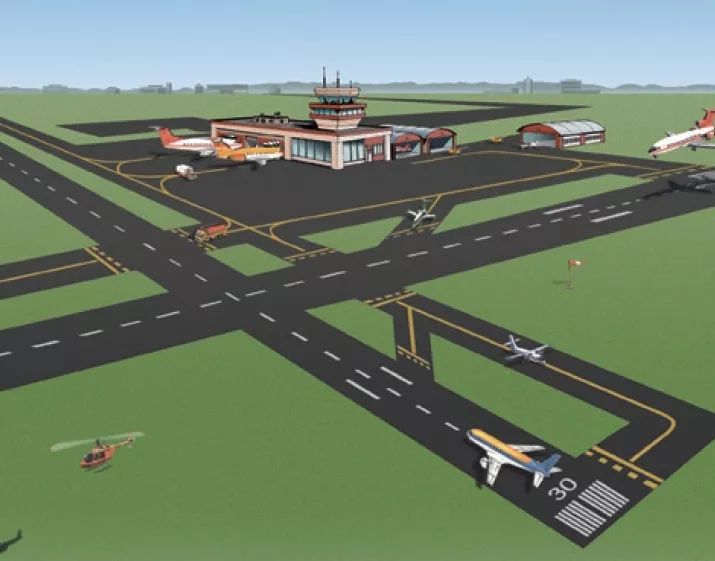
The above five parts all include measures to avoid errors and prevent runway invasion.
Runway intrusion is a serious safety problem. Runway collision events caused by runway invasion usually occur between aircraft and aircraft, aircraft and ground vehicles. The result is often a catastrophic accident with heavy casualties.

1 Ground taxi plan
Making a comprehensive plan is very important for safe taxiing. When making the airport ground taxi plan, we should pay as much attention as preparing for other flight stages.
Predict the taxi route. Plan according to automatic terminal information service (ATIS), aviation information (NOTAMS), airport map and the latest operation experience of the airport.
When leaving, make a plan before taxiing; When entering the site, make a plan before landing.
Spend some time studying the plan of the airport before leaving and entering Hong Kong.
Take the airport map with you at all times. This can be used at any time, whether in the planning stage or during the taxiing process.
Check the predicted taxi route against the airport map or taxi route map. Pay special attention to complex intersections (for example, there are more than two intersections on the taxiway).
Make it clear when you should pay attention to "looking up" observation during taxiing (for example, when turning at a complex intersection and crossing a runway).
After receiving the taxiing instructions from the controller, verify the designated route.


2 taxi procedure
According to the perfect operation procedure, the safety level of ground operation can be improved.
This part mainly introduces some general contents that should be included in the taxi program.
Air traffic control (ATC) instruction
When receiving the taxi instruction, you should:
Record taxi instructions, especially complicated instructions. This can prevent forgetting the instruction.
Monitor ATC instructions/permits issued to other aircraft.
Be especially vigilant when another aircraft has a similar call sign.
Listen carefully to prevent the execution of instructions/permits issued to other aircraft.
If you have any questions about ATC instructions/permits, you should ask them immediately.
Repeat all received instructions/permits with the call sign of your own aircraft.
If it is possible to delay or fail to execute ATC instructions, ATC must be informed immediately.

Situation awareness
When taxiing at the airport, you need to know your position at the airport and the relationship between your position and the taxiing route and other aircraft and vehicles at the airport. This is often called "situational awareness". You can keep situational awareness in the following ways:
Understand and implement ATC instructions and permits;
Use the airport map;
Understand the meaning of airport visual AIDS, such as airport signs, signs and lights;
Monitor radio calls and use airport maps to help locate other aircraft and vehicles at the airport;
Avoid distractions;

Use aircraft lights to indicate position and intention;
When the aircraft taxies, the "bow down" activity is reduced to a minimum.

During the taxiing process
Be especially careful when taxiing on the runway, especially at night and in low visibility.
Use all means to taxi the aircraft along the designated taxi route, including:
▲ Airport map;
▲ Airport signs, signs and lights;
▲ Heading instrument.
When approaching the entry point of using the runway, it is determined whether to execute the instruction of waiting outside the runway or the instruction of entering (or crossing) the runway.
Even after receiving permission, scan the whole runway and approach area before entering or crossing the runway.
After landing
When leaving the taxiway and crossing other runways after landing, you should concentrate as much as possible.
Don’t slide onto other runways after leaving the landing runway without ATC permission.
Don’t accept the command of the tower to temporarily change the taxiing direction unless you clearly understand and are sure to carry out the command.
Don’t make unnecessary calls or operations after landing and before leaving the runway completely.
Enter the runway and wait
When the take-off permit cannot be issued immediately due to traffic flow or other reasons, ATC uses the "wait on the runway" command.
Be careful when you receive the instruction to "wait on the runway", especially at night or in low visibility. Before entering the runway, remember:
Scan the whole runway;
Observe carefully whether there is any aircraft for final approach or landing taxi.

When ATC instructs you to "wait on the runway", it should inform you of the reasons for delaying the take-off, for example, there are departing aircraft, wakes or conflicts on the crossing runway.
If the take-off is delayed due to the landing of the preceding aircraft not leaving the runway, ATC shall:
▲ Inform you of the traffic conditions on the runway at that time, including permission to land, continuous take-off, full stop and take-off or unrestricted low-altitude approach;
▲ Notify the next landing aircraft of your waiting on the landing runway.
If the reason you have been told or seen for the delay in taking off does not exist, you should receive the permission to take off immediately.
If you don’t receive the permission to take off within a reasonable time after receiving the instruction of "waiting on the runway", you should contact ATC immediately.

When ATC issues a permission to "wait on the runway" in the contact lane and use part of the runway to take off, it will use the contact lane number.
If both the whole runway and part of the runway are used to take off at the same time, the phrase "full-length" will be included in the permit.

3 Aircraft lighting
No matter in the daytime or at night, the external lighting of the aircraft can make the aircraft more eye-catching, and the external lighting can also indicate your position and intention to other pilots.
Rules for the use of aircraft exterior lighting;
When starting the engine-turn on the rotating beacon light.
When taxiing-before taxiing, turn on navigation lights/position lights and strongpoint * (strobe lights should not be turned on if they will adversely affect the vision of other pilots or ground personnel. ), slide lights and identification lights.
When crossing the runway-when crossing the runway, all external lights of the aircraft should be turned on. In the process of crossing the runway, it should be considered that turning on the forward light of the aircraft will have an adverse impact on the sight of other pilots or ground personnel.
When waiting on the runway-turn on all external lights of the aircraft * (except landing lights) (strobe lights should not be turned on if they will adversely affect the sight of other pilots or ground personnel). ) to make it easier for the last approaching aircraft and ATC to see you.
When taking off-when receiving the permission to take off, turn on the landing light.

Standard aircraft lighting

4 communication
Effective communication between pilots and controllers is very important for the safety of ground operation. You can improve the controller’s understanding of you by responding appropriately and using standard telephone language. Guidelines for making communication clear and accurate are as follows:
When contacting ATC, use the correct communication procedure. When making initial contact, the call shall include the following contents:
▲ the other party’s call sign;
▲ own call sign;
▲ your position;
▲ You can briefly explain your intentions.
Whether you have reported your position to other controllers or not, you should explain your position when you make initial contact with tower or ground controllers.
At all times, use standard telephone language to make the communication between pilots/controllers clear and concise.

Pay close attention to the contents of the instructions issued by ATC. When contacting ATC, don’t do any unimportant tasks.
Instructions for entering the runway, waiting outside the runway or "waiting in the runway" may need to be repeated, including the runway number.
When preparing for takeoff and final approach on the runway, actively monitor other relevant frequencies of the tower and check the potential conflicts related to the runway you are using.
Repeat all take-off and landing permits, including runway numbers.
If you are not familiar with the taxiing route of the airport, you should apply for progressive taxiing instructions.
When instructed to listen to a certain frequency, just listen and don’t contact, and the controller will contact you.
To clarify any misunderstanding or confusion about ATC instructions or permits.

Telephone vocabulary list
Acknowledge-let me know that you have received my message.
Advise intentions-tell me your intentions.
AFFIRMATIVE——Yes。
Final-usually used when the aircraft is in the final approach channel or on the landing runway.
HOLDFOR (take-off permission, release, aircraft landing/taxiing, etc.)-Wait in place.
HOWDOYOUHEARME? -question, about the quality of the speech or to determine whether the speech is well received.
Immediately-ATC or pilots use this word when it is necessary to avoid an emergency.
NEGATIVE——"No ",or" not allowed ",or" incorrect ".
Read back-repeat the instructions to me.
Roger-I’ve received all your last words. You can’t use this word to mean "yes" or "no" (see Affirmative, Negative)
Standby-means that the controller or pilot must pause for a few seconds, usually to carry out other higher priority tasks. At the same time, it also means waiting, such as "standbyforclearance". If the delay interval is too long, the speaker should re-establish contact. "Standby" is not approval or rejection.
Unable-unable to comply with the definite instruction, request or permission.
Verify-requires confirmation of information (for example, "verify assignedaltitude").
Without delay-with the meaning of urgency, execute the approved instructions as soon as possible.
Wilco-I have received your message, understood it, and will follow it.
5 airport signs, signs and lights
Airport signs, signs and lights are used to help you move around the airport and land and take off.
Airport signs-differences and their meanings
When understanding airport signs, remember the following principles.
colour
The runway sign is white (the center line sign of taxiway guiding aircraft to enter, exit or cross the runway is yellow).
The taxiway sign is yellow.
Signs in the apron area may have other colors besides yellow (for example, white signs are usually used for vehicle passages).

Vehicle access in the apron area. The edge of the channel is highlighted with black and white interlaced signs. In many airports, the vehicle lanes are marked with solid white lines. Aircraft can glide through these passages, but not along them.
Style of taxiway sign
If the logo style includes more than 2 lines-some are solid lines and some are dotted lines.
Allow crossing from the dotted line side to the solid line side.
Only after the approval of ATC can we cross from the solid line side to the dotted line side.

When receiving the "HoldShort" command, be sure to stop taxiing before waiting for the first solid line of the position sign.

Do not cross the yellow double solid line at the edge of taxiway. But it is allowed to cross the yellow double dotted line.

Airport Signboard —— A signpost for safe taxiing.
It is very important to understand the meaning of color and tag.
Location tag: indicates the location of your taxiway or runway. The signboard is yellow on a black background.

Remember: black square, your position.
Mandatory instruction sign: indicates the entrance of runway or critical area, and the area where aircraft are forbidden to use. The signboard is written in white on a red background.

Direction sign: guide the aircraft to slide to the taxiway indicated by the sign at the intersection, and the arrow indicates the general direction of the aircraft turning. These signs are located before the intersection, usually on the left. The signboard is written in black on a yellow background.

Destination tag: use arrows to indicate the direction of determining the destination at the airport (for example, runway, terminal and apron). The signboard is also written in black on a yellow background.

Remember: the yellow marker used in combination indicates the direction.
Examples of airport signs:
Combination of tag cards:
A set of directional signs. The direction of the sign arrangement is from left to right, and it is arranged clockwise. The left turn sign is on the left side of the position sign, and the right turn sign is on the right side of the position sign.

Waiting position tag:
This sign is located next to the yellow waiting sign on the taxiway crossing the runway. The sign below indicates that the entrance of runway 08 is on your left and the entrance of runway 26 is on your right.


Airport lighting
Airports will use different lighting combinations, especially when aircraft are operating in low visibility conditions. When taxiing under visual meteorological conditions (VMC), keep in mind the following items:
Runway side lights are white (but in the last 2000 feet of the instrument runway, their side lights are yellow).
The lights or reflectors along the taxiway are blue.
Line lights or reflectors in taxiways are green.


Runway warning lights are flashing yellow lights (whether on the pavement or beside the taxiway), which especially indicate the waiting position of the runway.

Waiting position of runway 20R-2L located on taxiway b. A runway warning light above the ground is installed between the waiting sign and the pavement sign.

This is the runway waiting position as seen from the taxiway centerline. The waiting position is equipped with runway warning lights above the ground and embedded in the pavement.
This article is transferred from WeChat WeChat official account: Aviation Garden