Can the appearance of major illegal delisting regulations activate the "metabolism" mechanism of A shares?

  Xinhua News Agency, Shanghai, March 12th Question: Can the appearance of major illegal delisting regulations activate the "metabolism" mechanism of A shares?

  Xinhua News Agency reporter Pan Qing

  On the 9th, the Shanghai and Shenzhen Stock Exchanges simultaneously issued the Measures for the Implementation of Mandatory Delisting of Listed Companies for Major Violations of Law (Draft for Comment). While stipulating the circumstances of major illegal delisting, it is clear that major illegal listed companies may not resume listing, and fraudulent issuing companies may not apply for re-listing.

  In the new round of delisting system reform, why does fraudulent issuance bear the brunt? The compliance index of delisting system tends to be perfect. Can the "metabolism" mechanism of A shares be activated?

  The new delisting rules of Shanghai and Shenzhen Stock Exchanges were unveiled, and fraudulent issuance was the first to bear the brunt.

  On March 2nd, CSRC publicly solicited opinions from the public on the revision of Several Opinions on Reforming, Perfecting and Strictly Implementing the Delisting System of Listed Companies, strengthened the decision-making subject responsibility of the Exchange for the mandatory delisting of major illegal companies, and improved the mandatory delisting system for major illegal companies.

  A week later, the Shanghai and Shenzhen Stock Exchanges simultaneously issued the "Implementation Measures for Compulsory Delisting of Listed Companies for Major Violations (Draft for Comment)", which achieved full coverage and strict handling of possible major violations by listed companies through institutional arrangements.

  According to the exposure draft, the major illegal delisting situations stipulated in the Measures include not only the fraud in the initial public offering and reorganization listing, but also the major illegal disclosure of information such as annual reports. At the same time, the illegal facts identified by administrative punishment and judicial judgment can be used as the basis for the determination of compulsory delisting.

  Among all kinds of major illegal acts, fraudulent issuance bears the brunt. The new regulations stipulate that there are false records, misleading statements or major omissions in the application or disclosure documents of listed companies for initial public offering of shares, which are determined by the administrative punishment decision of the China Securities Regulatory Commission to constitute fraudulent issuance, or are made guilty by the people’s court according to Article 160 of the Criminal Law. Effective judgment; If a listed company issues shares to purchase assets, which constitutes reorganization and listing, its application or disclosure documents contain false records, misleading statements or major omissions, and it is determined by the China Securities Regulatory Commission that it constitutes fraudulent issuance, it will be forced to withdraw from the market.

  "Don’t tell lies, don’t make false accounts, true disclosure is the issuer’s absolute legal obligation and basic integrity requirements. Fear of the law, respect for the law, and adherence to the law are the bottom line requirements for issuers to participate in securities market issuance activities. " Lu Wendao, the chief counsel of the Shanghai Stock Exchange, said that as the most serious illegal act in the securities market, fraudulent issuance seriously eroded the operating foundation of the securities market and should be resolutely delisted and never tolerated.

  Optimize delisting procedures and tighten the road of "coming back"

  In addition to clarifying the situation of mandatory delisting for major violations of the law, the other two highlights of the new regulations are to optimize delisting procedures and tighten the road of "coming back".

  On the one hand, it is stipulated that the period of suspension of listing due to triggering major illegal forced delisting will be shortened from 12 months to 6 months.

  On the other hand, after a major illegal company is suspended from listing, it will no longer consider the company’s rectification and compensation, and will directly terminate its listing after the expiration of six months and may not resume listing. A company delisted due to fraudulent issuance shall not apply for re-listing. The time interval for companies that illegally delisted due to major information disclosure to apply for re-listing was extended from one year to five years.

  Prior to this, in the revision of the opinions on delisting reform, the CSRC decoupled the delisting of listed companies from the transfer to public security organs, and deleted the provisions on correcting illegal acts, replacing responsible personnel and properly arranging civil compensation to apply for resumption of listing.

  Jiang Mingde, chief consultant of Yixin Weiye Fund, believes that whether it is blocking the "back door" to correct illegal resumption of listing or closing the "door" for fraudulent issuing companies to return to A shares, it has conveyed a clear signal of strict supervision of major illegal delisting.

  While fully covering major illegal acts, the new regulations will also include "incorrigible after repeated education" in the scope of delisting. It is stipulated in the exposure draft that listed companies should be delisted if they are punished by the CSRC for violating the law of information disclosure for more than three times within 60 months.

  The relevant person in charge of the Shanghai Stock Exchange said that the purpose of the above arrangement is to form a comprehensive regulatory deterrent, leaving no dead ends, urging listed companies to fulfill their information disclosure obligations according to laws and regulations, and safeguarding the fundamental interests of small and medium investors.

  "Metabolism" mechanism is out of order, and diversified delisting indicators should be improved.

  As the second largest spot stock market in the world, the Shanghai and Shenzhen stock markets had 3,517 listed companies as of March 9, with a total market value of nearly 58 trillion yuan.

  While the volume is growing steadily, the A-share market has long been plagued by the failure of the "metabolism" mechanism. Wind statistics show that only 57 listed companies bid farewell to A shares in 17 years since PT Narcissus first set a precedent for delisting in 2001, including some companies that were absorbed and merged and delisted.

  The poor delisting mechanism has not only led to the chaos of "staying stiff but not retreating", but also seriously affected the stock market’s pricing function and resource allocation function.

  With the normalization of new share issuance, the supervision of the securities market shows a strict trend in the whole chain. From the initial public offering to the reorganization public offering, a series of system improvements are aimed at "entrance clearance". This also puts forward new requirements for the delisting system reform to unblock the "export customs".

  After several rounds of reform, A shares have established a market-oriented and diversified delisting index system, including financial indicators such as net profit, net assets, operating income and non-standard audit opinions, as well as trading indicators such as stock volume and stock closing price. On this basis, the release of relevant rules for mandatory delisting of major violations of laws will improve the compliance delisting indicators.

  It is worth noting that the new round of reform gives the two major exchanges the right to formulate rules for major illegal delisting. The relevant person in charge of the Shanghai Stock Exchange said that it will effectively assume the main responsibility of delisting decision-making, take whether major illegal acts affect the listing status of listed companies as the focus of consideration in rule-making, and clarify specific standards and implement supporting procedures and mechanisms in accordance with the principle of strictness.

  Prior to this, the Shanghai and Shenzhen Stock Exchanges had already practiced the mandatory delisting of major illegal activities. In 2016, *ST Boyuan, which was involved in major violations of information disclosure, became the first listed company in the history of A shares to be forced to withdraw from the market due to major violations. The following year, Xintai Electric became the first case of forced delisting of fraudulent issuance.
The largest duty-free shop in downtown Shanghai is very popular, so you must enter with an appointment ticket from tomorrow.

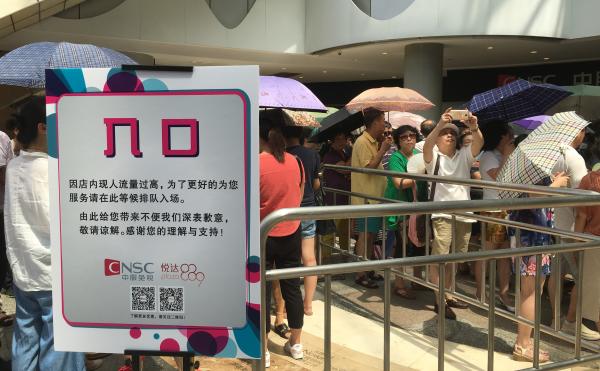
At 10: 30 am on August 8, at the entrance of Zhongfu Shanghai Duty Free Shop, a large number of customers lined up to shop in the store. The Paper reporter Zang Mingtu

Customers with self-service customs clearance can’t shop, the price advantage is questioned, and the queue order at the checkout counter is not ideal … Despite all kinds of complaints, the popularity of Zhongfu Shanghai Duty Free Shop (hereinafter referred to as "Duty Free Shop"), which started trial operation at 10 am on August 8, is bursting.

The largest duty-free shop in downtown Shanghai is located at 889 Square, yueda, Caojiadu, Jing ‘an District. Before 10 o’clock, there was a long queue of nearly 200 people at the entrance of the duty-free shop. When the door opens at 10 o’clock, after the first batch of customers enter the store, the store will start to restrict the flow, and a group of customers will enter the store about every 15 minutes.

On the afternoon of the same day, the person in charge of yueda 889 Square told the reporter of The Paper (www.thepaper.cn) that customers must enter the duty-free shop with an appointment ticket tomorrow. There are more than 1000 reservation tickets for tomorrow, which were distributed at 14: 00 on the same day. Customers who don’t have an appointment voucher can get an appointment voucher the day after tomorrow at the duty-free shop.

Self-service customs clearance customers cannot check out.

According to the on-site reminder, the shopping objects in duty-free foreign exchange goods are China tourists with passports, including diplomats, returned overseas students, foreign aid workers, laborers, ocean-going crew members and public servants with official passports in diplomatic institutions. Passengers of China nationality who have reached the age of 16 and entered the country with their passports can buy duty-free foreign exchange goods within the limited value set by the customs at the duty-free shop within 180 days from the date of entry.

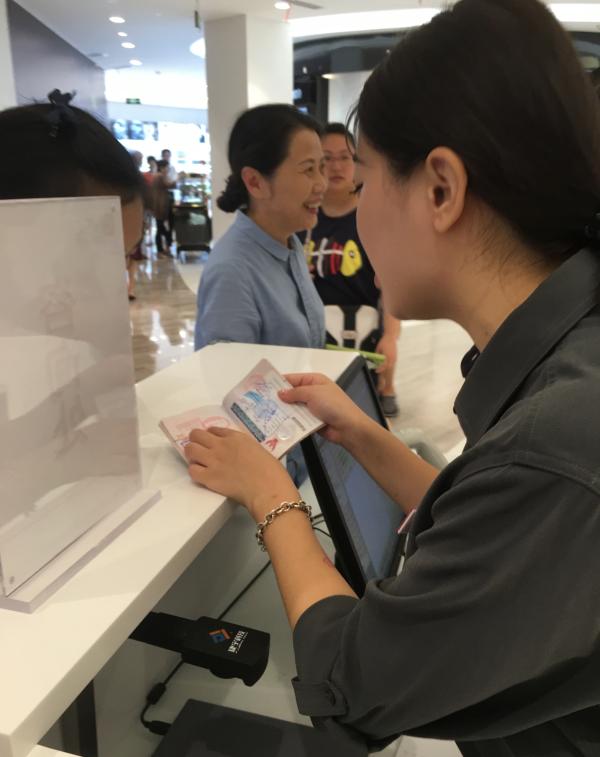
On August 8, at the service desk in the duty-free shop, the staff verified the customer’s passport and issued the shopping identification card to the customer after passing the inspection. The Paper reporter Zang Mingtu

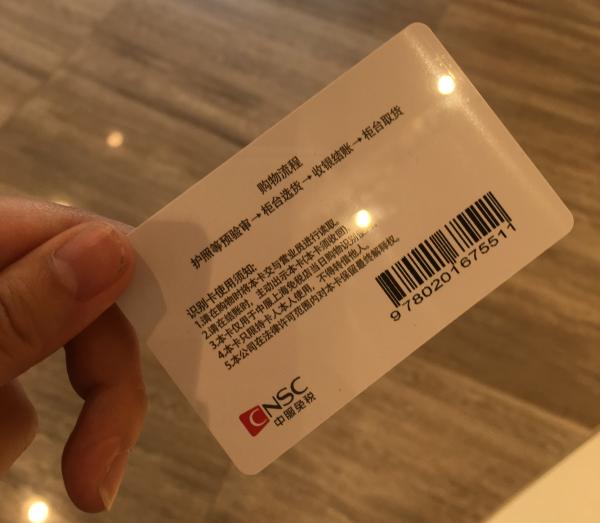
Shopping identification cards issued by duty-free shops to customers. The Paper reporter Zang Mingtu

When shopping in duty-free shops, you must first go to the service desk for examination with your passport and other documents and get a shopping identification card. The on-site staff reminded customers that even if they didn’t shop on the same day, they used up the "one-time" opportunity in "one-time purchase of duty-free goods within the limits set by the customs with passports within 180 days from the date of entry", that is, they could not come to buy again.

Duty-free shops require passports to have entry stamps, which makes many self-service customs clearance customers lose "one-time" shopping opportunities.

Recently, the border inspection department has fully realized self-service customs clearance at terminals T1 and T2 of Shanghai Pudong Airport. Inbound passengers with China electronic passports and Hong Kong and Macao residents’ passes to and from the Mainland can complete the self-service customs clearance procedures within 12 seconds. Since there is almost no need to queue up, self-service customs clearance at entry has become the first choice for passengers with China electronic passports to return to China recently. Because of the self-service customs clearance, these passengers have no entry stamps on their passports.

On August 8th, a reporter from The Paper saw in the duty-free shop that many customers were stuck in front of the checkout counter because their passports didn’t have entry stamps, so they couldn’t check out and pick up the goods.

"Since the passport for self-service customs clearance cannot be purchased (duty-free shop goods), why did you pass the inspection with the same passport at the beginning? So I missed the shopping opportunity of duty-free shops. What should I do? " A customer questioned.

In the face of similar dissatisfaction from many customers, the cashier staff still insisted: "Shopping must have an oval entry stamp with China border inspection cover, but we can’t use electronic stamps here.When you (the customer) return to China next time, ask the border inspector to put a stamp on the electronic sign. "

In this regard, some customers spit out: "It was originally Bali who traveled back to China to replenish some goods, queued for half an hour to enter the store, queued for passport inspection, selected goods, came to the cashier, and the cash register was down, and the queue arrived, only to say that the passport for self-service customs clearance could not be purchased, and also said that it was not common to go abroad."

Some customers said: "Although there is no entry stamp for entry self-service customs clearance, I have an exit stamp, which is within 180 days, and I am standing here now. Can’t I prove that I have entered the country?"

The Paper reporter noticed that some customers are ready to "rub" other people’s passports for shopping after selecting goods. For such "private cooperation", duty-free shop staff did not interfere.

Except for many customers who can’t pay for self-service customs clearance, the cash register on the second floor of the duty-free shop was down for a time, which led to the longer and longer queue of customers paying bills. Moreover, due to the circular structure of the duty-free shop cashier, many later customers could not find the end of the queue. The on-site staff reminded customers to queue orderly, but when customers asked where the end of the queue was, the staff also said that they didn’t know.

Some purchasing behaviors have legal risks.

The Paper reporter noticed that some customers took pictures of goods in duty-free shops and started a "purchasing".

In this regard, Ge Zhihao, a lawyer of Beijing Guantao (Shanghai) Law Firm, said that the duty-free shops opened in urban areas are not "completely and unconditionally open" to domestic citizens, but are accompanied by preconditions, including the purpose of the goods purchased by consumers here and the total value of the goods purchased.

According to the law, the purpose of setting up duty-free shops is to take care of the reasonable needs of individuals to import goods for their own use, and then to exempt consumers from customs duties, value-added tax, consumption tax, etc. The starting point is to make it clear that the ultimate purpose of goods purchased by individuals is not to put them in circulation. Secondly, the customs also clearly stipulates the amount of personal tax exemption, mainly based on the announcement of the General Administration of Customs (No.54, 2010) that goods for personal use, except tobacco products, alcoholic products and 20 kinds of goods that should be taxed by the state, can enjoy tax exemption within a total value of 5,000 yuan.

Ge Zhihao believes that "personal purchasing" should be treated differently in three situations. First, purchasing is essentially a personal consumption, and then the goods are donated, so under the premise that the total value of the purchased goods does not exceed the limit, this behavior is legal. Secondly, assuming that the ultimate goal of purchasing is to seek economic benefits by reselling related goods in the name of personal consumption, it is essentially a sales behavior, obviously not the "convenience" object of tax exemption policy, but should be regulated by relevant tax laws in China. Third, the so-called "purchasing" means personal consumption under the guise of someone else’s passport, so because the actual consumers themselves do not have the qualification to enjoy the exemption policy, their consumption behavior is suspected of tax evasion.

In addition, according to the relevant provisions of the criminal law, if an individual fails to declare a large amount of tax payment by deception or concealment, accounting for more than 10% of the taxable amount, he will also be suspected of tax evasion. Therefore, some "personal purchasing" behaviors have great legal risks.

You must enter the store with an appointment ticket tomorrow.

On August 8, some customers suggested that the goods in duty-free shops were not cheap.

For example, a customer told the The Paper reporter that the price of a suit of a certain brand of cosmetics in the duty-free shop is 698 yuan. "This price, don’t compare with the origin of the United States, it has no price advantage over Hong Kong." Another customer said that taking a backpack of a certain brand as an example, the price of duty-free shops exceeds that of 1000 yuan, and a shopping mall in Jing ‘an Temple nearby is on sale. The discounted price of backpacks is around 600 yuan. "Of course, it is not exactly the same style, but the style is similar."

Regarding the price advantage of duty-free shops, the shop assistant said that cosmetics are about 30% cheaper than counters in Shanghai; Compared with the duty-free shops in Pudong Airport, some goods are expensive and some are cheap.

In addition, some customers told The Paper that there is milk powder on the second floor of the duty-free shop, which is much cheaper than the market price, but the brand is single. Take a section of milk powder as an example. The price of duty-free shop is 280 yuan, and the market price is 346 yuan. For the single brand of milk powder, the salesperson said that because the quality of milk powder of this brand is better. However, many customers told The Paper that the baby at home is not drinking this brand of milk powder, and they are not going to change the milk powder for the baby, so they are not going to buy it.

On the first day of opening, the largest duty-free shop in downtown Shanghai was full of popularity, despite the fact that customers with self-service customs clearance could not shop, the queuing order at the checkout counter was not ideal, and the price advantage was questioned by customers.

The person in charge of yueda 889 Square, where the duty-free shop is located, told the The Paper that a large number of customers lined up outside the duty-free shop on the first day of opening.Customers must enter the duty-free shop with an appointment voucher tomorrow. Reservation tickets were issued from 12: 00 on the same day and were issued at 14: 00, with more than 1,000 tickets issued. Customers who don’t have an appointment voucher can get an appointment voucher the day after tomorrow at the duty-free shop.