Multi-local and multi-departmental efforts to carry out flood control and disaster relief work

  Beijing, June 20 (Xinhua) The Central Meteorological Observatory predicts that heavy rainfall will continue in the south of South China from the night of the 20th to the 21st, and the rain belt will rise northward from the 22nd. The hot weather in Huanghuai and other places in North China is expected to last until the 26th, with some areas reaching about 40 degrees Celsius. At 18: 00 on the 20th, the Central Meteorological Observatory issued blue rainstorm warning, orange high temperature warning, yellow strong convective weather warning and meteorological risk warning for floods in small and medium-sized rivers, and jointly issued meteorological risk warning for geological disasters with the Ministry of Natural Resources.

  It is estimated that from the night of 20th to 21st, there will be heavy rains in central and northern South China and eastern Jiangnan, and there will be heavy rains locally, accompanied by strong convective weather such as short-term heavy precipitation. On the 22nd, the rain belt lifted northward, 22— On the 24th, there will be moderate to heavy rain in the eastern part of the northwest, the southern part of the northeast, Huanghuai, Jianghuai and the northern part of the south of the Yangtze River, and there will be heavy rain in the local area, accompanied by strong convective weather such as short-term heavy precipitation and thunderstorms. 26— On the 29th, there will be another obvious rainfall process in the eastern part of Northwest China, southern part of North China, southern part of Northeast China, Huanghuai, Jianghuai, western Jiangnan and eastern part of Southwest China.

  Affected by persistent heavy rainfall, the No.4 flood occurred in Xijiang River in 2022 and the No.2 flood occurred in Beijiang River in 2022, which developed into a basin flood again. It is predicted that the water level of Xijiang River may continue to rise and maintain high water level for a long time, and there may be a big flood in Beijiang River. The Pearl River Defense General launched a flood control level II emergency response at 12: 00 on the 20th.

  On the 20th, the National Defense Office and the Emergency Management Department continued to hold a video consultation and dispatch on flood control topics, and discussed and judged with the China Meteorological Bureau, the Ministry of Water Resources and the Ministry of Natural Resources. The video was connected with the defense offices in Zhejiang, Anhui, Jiangxi, Hunan, Guangdong, Guangxi and Guizhou to analyze and judge the current flood situation and development trend, and further dispatch and deploy flood control and disaster relief work in the middle and lower reaches of the Pearl River and the Yangtze River. At present, the National Defense General continues to maintain a three-level emergency response to flood control, and has sent three working groups and expert groups to assist local flood control and disaster relief work in Guangdong, Guangxi and Jiangxi.

  The Ministry of Water Resources maintains the level III emergency response of flood and drought disaster prevention in Guangdong and Guangxi provinces and the level IV emergency response in Zhejiang, Anhui, Fujian, Jiangxi, Hunan, Guizhou and Yunnan provinces. There are six working groups and expert groups in Guangdong and Guangxi to guide flood prevention. The Pearl River Water Conservancy Committee of the Ministry of Water Resources further dispatches the reservoirs in the Pearl River Basin, and makes every effort to reduce the flood control pressure in the lower reaches of the Xijiang River and the Beijiang River and the Pearl River Delta.

  The Guangxi Meteorological Observatory continued to issue an orange rainstorm warning at 9: 00 on the 20th, and the Class II emergency response of major meteorological disasters (rainstorms) continued to take effect. The Grain and Material Reserve Bureau of Guangxi Zhuang Autonomous Region urgently received and dispatched 50,000 pieces of central disaster relief reserve materials, and arranged 4 transport vehicles on the evening of 18th to dispatch 630 tents to Wuzhou City and Guigang City overnight. On the 19th, Guangxi Disaster Relief Materials Reserve Center put in 30 transport vehicles and urgently dispatched 13,000 disaster relief materials to Liuzhou, Guilin, Wuzhou, Guigang, Yulin, Hezhou, Hechi and Laibin.

  Jiangxi Hydrological Monitoring Center upgraded and issued a red warning of flood at 11: 00 on the 20th: It is estimated that the Poyang Lake area will continue to rise in the next four days, and there may be a flood of about 0.4 meters exceeding the warning. Jiangxi Provincial Defense Office issued flood control duty information, requiring all localities to do a good job in ensuring the safety of wading people under the current high water level of rivers and lakes. Jiangxi Provincial Defense Index sent two working groups to Shangrao City and Jingdezhen City to help guide the prevention and response of heavy rainfall.

  Hunan Provincial Department of Natural Resources and Hunan Meteorological Bureau jointly issued the meteorological risk warning of geological disasters in Hunan Province on the 20th: It is estimated that from 20: 00 on the 20th to 20: 00 on the 21st, due to the influence of rainfall, the risk of sudden geological disasters in some areas of southern Hunan and western Hunan is high (yellow warning). The Hunan Provincial Meteorological Bureau predicts that from 20th to 21st, the south pressure of heavy rainfall in Hunan will weaken, and on 22nd, it will be dominated by showers.

  (Comprehensive reports by our reporters Li Hongmei, Qiu Chaoyu, Wang Hao, Pang Geping, Zheng Yi, Yang Yanfei, Zhou Huan and Wang Yunna)
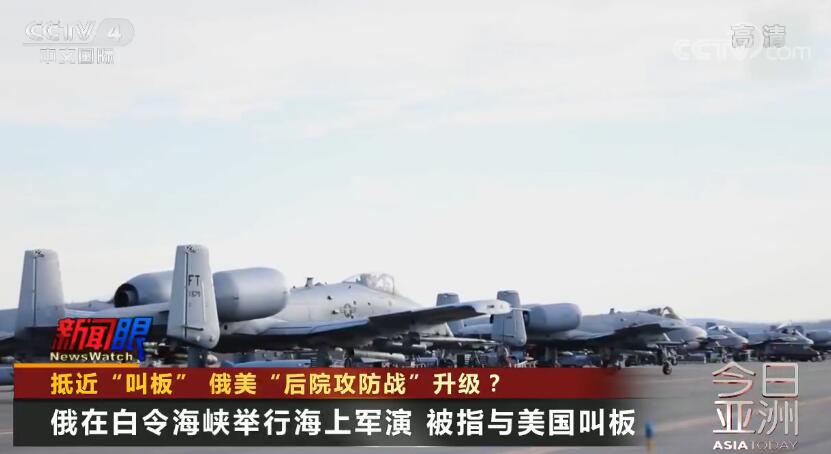
Military exercises in the Bering Strait have frequently seen renewed friction between Russia and the United States, and "backyard offensive and defensive warfare" has escalated.

CCTV News:The United States and Russia never lack topics! Recently, the Russian army used the nuclear-powered guided missile cruiser "Peter the Great" and a nuclear submarine to hold maritime military exercises in the Bering Strait and launch missiles. The Bering Strait is located between Russia and Alaska, and the situation of "backyard attack and defense" between Russia and the United States is getting worse.

The Bering Strait is located between Russia and Alaska, and the narrowest place is only about 37 kilometers. In the past two months, exercises have been going on here.

The latest one came from Russia. The Russian army used the nuclear-powered guided missile cruiser Peter the Great and a nuclear submarine to hold a maritime military exercise in the Bering Strait and launch missiles.

Just over a month ago, the United States just held a multinational joint military exercise codenamed "Red Flag-Alaska" in Alaska. This military exercise was divided into two sides, and actual combat simulation exercises were conducted, mainly including air interception, emergency target attack and close aviation support. Some public opinion believes that Russia’s intention to challenge the United States this military exercise is obvious.

The Bering Strait connects the Arctic Ocean and the Pacific Ocean and is of great military value.

The geographical position of the Arctic is unique, and it is a highland for deploying military strategic weapons and conducting military reconnaissance. As an important military passage connecting the Arctic Ocean and the Pacific Ocean, the Bering Strait holds the right of entry and exit of military equipment and personnel in this area to a certain extent, and its military strategic value is quite prominent. In recent years, the competition between the United States and Russia in this region has gradually warmed up.

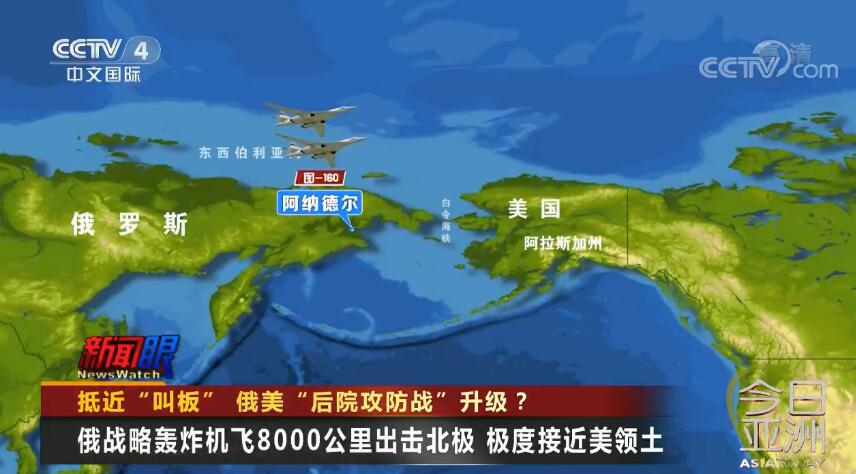
In August this year, two Russian Tu -160 strategic bombers flew over 8,000 kilometers to a city in the easternmost part of the Russian Arctic — — Anadel, it’s across the Bering Strait, opposite Alaska.

It is reported that Russian pilots have been flying continuously for nearly 10 hours without stopping. This is the first time in recent years that a Russian strategic bomber landed in Anadel near the Russian-American border.

Alaska is America’s first line of defense against Russia.

Then on September 1st and 11th, Russia sent two Tu -95 strategic bombers to Alaska. In response to these two cruises, the US military dispatched F-22 fighters for tight surveillance. Alaska is America’s first line of defense against Russia. There are Elmendorf Air Force Base and elson Air Force Base here. Not only the most advanced F-22 fighters of the US military are deployed, but also a large number of F-16 fighters and E-3 early warning aircraft are deployed to deal with Russia.

The strategic position of the Bering Strait is so important, but the number of frictions between the United States and Russia here is relatively less than that in the Black Sea and the Baltic Sea.

Russia and the United States compete in multiple sea areas to upgrade their warships.

9 meters, 3 meters, 1.5 meters, in recent years, the contest between Russia and NATO led by the United States has gradually escalated in several sea areas, and the distance between US and Russian military aircraft and naval aircraft is getting closer and closer.

On the 5th of this month, in the night sky of the Black Sea, a Russian Su -27 fighter plane flew at high speed in front of the EP-3E Aries II electronic reconnaissance plane in the United States. According to American officials, the Su -27 fighter plane flew over the US EP-3E at close range twice. When the second flight was out of date, the Su-27 fighter plane also opened the afterburner during the turn and tilt flight. 

In January this year, the Russian Su -27 and the US EP-3 reconnaissance plane once made a move over the Black Sea. At that time, the closest distance between the Russian Su -27 fighter plane and the intercepted U.S. EP-3E reconnaissance plane was less than 1.52 meters. The high-temperature gas emitted by the engine of the Su -27 fighter plane was directly sprayed on the EP-3E reconnaissance plane, forcing the U.S. reconnaissance plane to end its mission early and return home.

In September this year, in the Mediterranean, due to the still tense situation in Syria, the US Navy’s Burke-class destroyer approached the Russian military exercise area. After the Russian military plane found it, it passed over the US warships at close range.

Is the window cleaning robot really easy to use

     As the Spring Festival approaches, every household puts the cleaning of glass windows on the agenda. How to clean the glass in high-rise residential buildings? The reporter visited and found that in addition to manual window cleaning artifacts, electric window cleaning robots are increasingly favored by the public. Is the expensive window cleaning robot really easy to use? On November 30th, Nanjing Consumers Association released the evaluation and analysis report of window cleaning robot. The reporter learned at the scene that the performance of window cleaning robot is not directly proportional to the price.

  Yangzi Evening News/Zi Niu News reporter Jiang Jingyi

  The public reported that the window cleaning robot of more than 2,000 yuan could not wipe the dead corner.

  "It took more than 2,000 yuan to buy a window cleaning robot to clean the window. It took no effort, but the cleaning effect was not as good as expected." Mr. Zhang, a citizen of jianye district, Nanjing, lives on the 21st floor. Because it is close to the road, the dust is heavy, and the glass window is very difficult to clean. "It is expensive and laborious to call for cleaning every week, and it is not clean by myself, so I bought the window cleaning robot from the Internet."

  Pour clean water into the window cleaning robot, and then adsorb the window cleaning robot on the glass. Consumers can control it manually. The electric window cleaning robot is light and effortless, but the cleaning effect is not as good as expected. "Many dead corners can’t be wiped, and heavy stains can’t be wiped off." Mr. Zhang bought a circular window cleaning robot, and the four corners of the glass window are difficult to cover.

  The reporter found on the Internet that compared with the manual window cleaning artifact of tens of yuan, the price of electric window cleaning robots is mostly 1,000-2,000 yuan, and there are also more than 3,000 yuan of window cleaning robots.

  Comparative experiment: window cleaning robot is not as expensive as possible.

  Is the window cleaning robot as expensive as possible? Nanjing Consumers Association has purchased 10 types of window cleaning robots from market stores (appliance stores) and mainstream e-commerce platforms (JD.COM, Suning.cn, Tmall). The unit price of samples ranges from 830 yuan to 3,280 yuan, involving 9 domestic and foreign brands in the mainstream market. The structural types include crawler-type square window cleaning machines and double-suction-cup rotary oval window cleaning machines.

  The reporter noted that at present, there is no effective national mandatory or recommended standard for window cleaning robots in China, so this comparative test evaluation project refers to the relevant standards of similar products as much as possible.

  "Experiments were mainly conducted from the aspects of cleanliness, noise, battery life and energy consumption. The results showed that the coverage of these 10 prototypes was good as a whole, reaching more than 95%, and the performance was not necessarily proportional to the price. In this test, the overall noise of the window cleaning robot is relatively large, with the lowest average reaching 58dB, and seven prototypes reaching more than 60 dB. More than 50dB will affect rest and sleep, so it is best to keep a certain distance between man and machine when using. " Yu Qi, a senior engineer of Nanjing Institute of Product Quality Supervision and Inspection and National Smart Grid Quality Inspection Center, showed a variety of window cleaning robots on the spot. The same glass, HOBOT-388 sample can be cleaned in 115 seconds, while BOBOT(WIN701) sample takes 348 seconds to clean.

  In addition, all models have the functions of falling prevention, path planning, starting point memory and remote control. There are many functions supported by high prices, but relatively few functions supported by low-priced products, and some explicit functions cannot be realized.

  Expert advice: dry wipe before wet wipe when using.

  "When purchasing, consumers should first be clear about their own needs, such as the area of glass in their homes, whether they are equipped with security window, etc., and purchase them in a targeted manner." Cao Wei, Deputy Secretary-General of Nanjing Consumers Association, suggested that consumers should try the machine on the spot when purchasing offline, and check whether the noise range is within their acceptable range.

  Although all models have anti-fall function, you should first fasten the safety rope when using it to prevent falling from high altitude. When using, try to wipe off the surface wind and sand first, then wet it, and spray cleaning liquid according to the requirements of the manual to prevent the window cleaning robot from slipping because the rag is too wet.

  After use, consumers should clean the rag and crawler (if any) of the machine in time to prevent the dust accumulation from affecting the next cleaning effect. The battery of the window cleaning robot should be charged at regular intervals (4-6 months is recommended) to ensure the service life of the lithium battery.