Xinhua News Agency, Beijing, December 4th-the State Council Press Office published a white paper entitled "Democracy in China" on December 4th. The full text is as follows:
Democracy in China
(December 2021)
People’s Republic of China (PRC)
the State Council Information Office
catalogue
foreword
1. the Communist Party of China (CPC) leads the people to realize people’s democracy in the whole process.
Second, it has scientific and effective institutional arrangements
(a) the state system of people’s democratic dictatorship.
(2) The political system that implements the people’s congress system
(3) Adhere to and improve the system of multi-party cooperation and political consultation led by the Communist Party of China (CPC).
(4) Consolidate and develop the broadest patriotic united front.
(5) Adhere to and improve the system of regional ethnic autonomy.
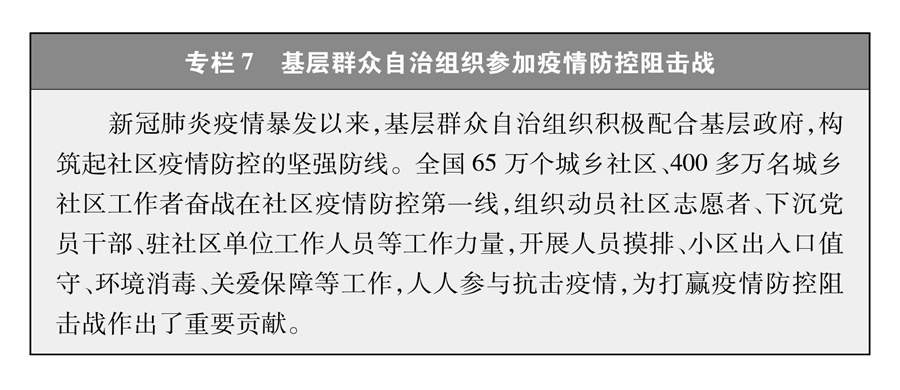
(six) adhere to and improve the grass-roots mass autonomy system.
Third, democratic practice with concrete reality
(1) Democratic elections
(2) Democratic consultation
(3) Democratic decision-making
(D) Democratic management
(5) Democratic supervision
Fourth, democracy that is widely and truly effective
(1) People enjoy a wide range of rights.
(2) People’s democratic participation has been expanding.
(C) efficient state governance
(D) Social harmony and stability
(5) The use of power has been effectively restricted and supervised.
Fifth, enrich the form of human political civilization
(A) to explore new paths for the development of human democracy.
(B) Take the road of democratic development in line with national conditions.
(3) Promoting the democratization of international relations
(4) Strengthen exchanges and mutual learning among civilizations.
Concluding remarks
foreword
Democracy is the common value of all mankind and an important concept that the people of the Communist Party of China (CPC) and China have always adhered to.
This year marks the centenary of the founding of the Communist Party of China (CPC). 100 years ago, when the Communist Party of China (CPC) was born, he made it his initial intention and mission to seek happiness for the people of China and rejuvenation for the Chinese nation, and made unremitting exploration and struggle to realize that the people are masters of their own affairs. Over the past 100 years, the Party has held high the banner of people’s democracy, led the people to become masters of their own affairs in a country with thousands of years of feudal social history and a semi-colonial and semi-feudal society in modern times, and the people of China have truly become masters of their country, society and their own destiny.
Democracy in China is people’s democracy, and people being masters of their own affairs is the essence and core of democracy in China. Since the 18th National Congress of the Communist Party of China, the Party has deepened its understanding of the development law of China’s democratic politics, put forward the great idea of people’s democracy in the whole process and vigorously promoted it. The democratic values and ideas have been further transformed into scientific and effective institutional arrangements and concrete and realistic democratic practices. The whole process of people’s democracy has achieved the unity of process democracy and outcome democracy, procedural democracy and substantive democracy, direct democracy and indirect democracy, people’s democracy and national will. It is a full-chain, all-round and full-coverage democracy, and it is the most extensive, authentic and effective socialist democracy.
Democracy is historical, concrete and developing. Democracy in all countries is rooted in their own historical and cultural traditions, and grows up in the practical exploration and wisdom creation of their own people. The democratic roads are different and the democratic forms are different. Evaluating whether a country’s political system is democratic and effective mainly depends on whether the country’s leadership can be replaced in an orderly manner according to law, whether all the people can manage state affairs and social affairs, manage economic and cultural undertakings according to law, whether the people can express their interests smoothly, whether all sectors of society can effectively participate in the country’s political life, whether the country’s decision-making can be scientific and democratic, whether talents from all walks of life can enter the country’s leadership and management system through fair competition, whether the ruling party can achieve leadership over state affairs in accordance with the Constitution and laws, and whether the use of power can be effectively restricted and supervised.
Democracy is not an ornament, not for decoration, but for solving problems that people need to solve. Whether a country is democratic or not depends on whether the people are the masters of the country, whether they have the right to vote or not, and whether they have the right to participate extensively. It depends on what verbal promises people get in the election process, and more importantly, how many of these promises have been realized after the election; It depends on what kind of political procedures and rules are stipulated by the system and laws, and it depends more on whether these systems and laws are really implemented; It depends on whether the rules and procedures of power operation are democratic, and more importantly, whether power is really supervised and restricted by the people.
Democracy is the right of people of all countries, not the patent of a few countries. Whether a country is democratic or not should be judged by its people, not by a few outside people. Whether a country in the international community is democratic or not should be judged by the international community together, not by a few self-righteous countries. There are many ways to achieve democracy, and it is impossible to be uniform. It is undemocratic to measure the colorful political system of the world with a single yardstick and examine the colorful political civilization of mankind with a monotonous eye.
Democracy is diverse and the world is colorful. In the garden of world civilization, the flower of democracy in China is blooming brilliantly. China is willing to exchange and learn from each other and work together to contribute wisdom and strength to the development and progress of human political civilization.
1. the Communist Party of China (CPC) leads the people to realize people’s democracy in the whole process.
The Chinese nation has a long history, hard work and wisdom, and has created a splendid political civilization. In the long history of more than 5,000 years, the people-oriented thought formed by the people of China contains rich democratic factors, which embodies the simple cognition and unremitting pursuit of democracy by the people of China. However, under feudal autocracy, the broad masses of working people were always at the bottom of oppression and exploitation. After modern times, China has gradually become a semi-colonial and semi-feudal society. The country will fall, the nation will die, and the people will have no democracy at all. In order to save the nation and survive, the people of China rose up and fought, and various revolutionary changes rose one after another, and various salvation schemes were introduced in turn, but they failed. After the Revolution of 1911, China’s attempts to imitate the parliamentary system, multi-party system, presidential system and other western political systems ended in failure. The rise of the New Culture Movement with the basic slogan of "democracy" and "science", the victory of the October Revolution in Russia, the outbreak of the May 4th Movement, and the spread of Marxism in China have promoted the great awakening of the people in China, and the advanced elements in China have a deeper thinking and new understanding of democracy.
In 1921, the the Communist Party of China (CPC) was founded, which lit up the light of democracy in China. During the period of the new-democratic revolution, the Party led the people in an arduous struggle for democracy and resistance to oppression and exploitation, won the victory of the new-democratic revolution, established the new China, and achieved a great leap from thousands of years of feudal autocracy to people’s democracy in China. Since then, the people of China have stood up, China’s democratic development has entered a new era, and the people have become masters of their own affairs from their dreams to reality. During the period of socialist revolution and construction, the Party led the people to establish and consolidate state power, carry out socialist transformation of the means of production, formulate and promulgate the first constitution of new China, establish the system of people’s congresses, the system of multi-party cooperation and political consultation led by the Communist Party of China (CPC), and the system of regional ethnic autonomy. The political framework, economic foundation, legal principles and institutional framework in which the people are masters of their own affairs were basically established and developed, and the democratic building in China stood tall. In the new era of reform, opening-up and socialist modernization, the Party has led the people to unswervingly push forward the building of socialist democracy and the rule of law, adhere to the road of political development in Socialism with Chinese characteristics, adhere to the organic unity of Party leadership, people being masters of the country and governing the country according to law, actively and steadily promote political system reform, consolidate and develop the people’s congress system, further improve the basic political systems such as multi-party cooperation and political consultation system led by the Communist Party of China (CPC), regional ethnic autonomy system and grass-roots mass autonomy system, and make the political system guarantee and social material foundation for democratic development more solid.
Since the 18th CPC National Congress, Socialism with Chinese characteristics has entered a new era. The CPC Central Committee with the Supreme Leader as the core, based on the new historical position, has profoundly grasped the new changes in the main social contradictions in China, actively responded to the people’s new demands and expectations for democracy, profoundly absorbed the experience and lessons of the ups and downs of chaos control in ancient and modern China and abroad, comprehensively summarized the remarkable achievements made in China’s democratic development, United and led the people to develop people’s democracy in the whole process, and China’s democratic development entered a new historical period. Adhere to and strengthen the party’s overall leadership, deepen the reform of the party and state institutions, and further strengthen the party’s leadership over the development of people’s democracy throughout the process. We will promote the modernization of the national governance system and governance capacity, establish and adhere to Socialism with Chinese characteristics’s fundamental system, basic system and important system, and improve the system of people being masters of their own affairs. We will comprehensively promote democratic elections, democratic consultation, democratic decision-making, democratic management and democratic supervision, and jointly promote electoral democracy and deliberative democracy. The people’s orderly political participation in accordance with the law has been expanding, and the people’s democratic life has been rich and colorful. People’s democracy in the whole process has made the people the masters of the country better reflected in the country’s political life and social life. The superiority of Socialism with Chinese characteristics’s political system has been better brought into play, and the lively, stable and United political situation has been consolidated and developed, which has inspired and condensed the majestic power of the China people in their struggle for a new era. The Party unite and led that people, achieved great strategic achievement in fighting the COVID-19 epidemic, historically solved the problem of absolute poverty, built a well-off society in an all-round way, defused a series of major risks, and embarked on a new journey of building a socialist modern country in an all-round way.Towards the common prosperity of all the people, the whole process of people’s democracy has shown great vitality and strong vitality in the land of China, the people of China have become more confident in democracy, and the road to democracy in China has become wider and wider.
The whole process of people’s democracy is a great creation of the Communist Party of China (CPC)’s unity to lead the people to pursue democracy, develop democracy and realize democracy, and it is the crystallization of the Party’s experience in continuously promoting China’s democratic theory innovation, system innovation and practice innovation. The Communist Party of China (CPC)’s struggle history is the struggle history of uniting and leading the people to explore, form and develop people’s democracy in the whole process. The whole process of people’s democracy is the inevitable result of the historical logic, theoretical logic and practical logic of the party’s unity and leading the people’s long-term struggle in modern times, and it is also the inevitable requirement of adhering to the party’s essential attributes and practicing the party’s fundamental purpose. The whole process of people’s democracy fully demonstrates the nature of the socialist country and the people’s dominant position, so that the people’s will can be better reflected, the people’s rights and interests can be better protected, and the people’s creative vitality can be further stimulated. The whole process of people’s democracy, formed and developed in the unremitting struggle of the Party leading the people to strive for national independence, people’s liberation and realize the country’s prosperity and people’s happiness, is rooted in the vast land of China, sucks the cultural nutrients accumulated by the long struggle of the Chinese nation, learns from the outstanding achievements of human civilization, conforms to China’s national conditions, and enjoys the heartfelt support of the people. It has a profound realistic foundation and broad development prospects. The whole process of people’s democracy, with complete institutional procedures and complete participation practice, has better combined electoral democracy and deliberative democracy, built a democratic system covering more than 9.6 million square kilometers of land, more than 1.4 billion people and 56 ethnic groups, and realized the extensive and sustained participation of the overwhelming majority of the people. People’s democracy in the whole process not only has distinctive China characteristics, but also embodies the common values of all mankind.China’s wisdom and China plan have been contributed to enriching and developing human political civilization.
The Communist Party of China (CPC)’s leadership is the fundamental guarantee of people’s democracy in the whole process of China’s development. In a big country like China, it is not easy to truly express and realize the wishes of more than 1.4 billion people, and there must be strong and unified leadership. The Communist Party of China (CPC) always insists on taking the people as the center, adhering to the people’s dominant position, and truly ruling for the people and relying on the people; Give full play to the leading core role of taking the overall situation into account and coordinating all parties, ensure that the party leads the people to effectively govern the country, and ensure that the ideas, principles and policies of people’s democracy are implemented in all aspects of national political life and social life; Adhere to the mass line of doing everything for the masses, relying on the masses, coming from the masses and going among the masses, keep close contact with the masses, and unite the wisdom and strength of the overwhelming majority of the people; Adhere to inner-party democracy, implement democratic elections, democratic decision-making, democratic management and democratic supervision, and promote and promote the development of people’s democracy; Improve the system and mechanism of selecting and employing people, so that outstanding talents from all walks of life can enter the party’s leadership system and state governance system, and ensure that the leadership of the party and the state is in the hands of people loyal to Marxism, the party and the people; Adhere to the rule of law, rule the country according to law, lead legislation, ensure law enforcement, support the judiciary, take the lead in obeying the law, and ensure the effective implementation of the party’s policies and the people to be masters of the country through the rule of law.
Second, it has scientific and effective institutional arrangements
In China, all national systems are built around the people being the masters of the country, and the national governance system is built around the realization of the people being the masters of the country. The whole process of people’s democracy has a complete system and procedure. These institutional procedures have formed a comprehensive, extensive and organically connected system of people being the masters of their own country, and built diverse, smooth and orderly democratic channels, effectively ensuring the unity of the party’s ideas, the will of the state and the will of the people, and effectively ensuring that the people are the masters of their own country.
(a) the state system of people’s democratic dictatorship.
China is a socialist country under the people’s democratic dictatorship led by the working class and based on the alliance of workers and peasants. The people’s democratic dictatorship embodies the fundamental nature of China.
China adheres to the organic unity of democracy and dictatorship, ensuring that the people are masters of their own affairs. On the one hand, we always adhere to "democracy" in the people’s democratic dictatorship, insist that all state power belongs to the people, and ensure that the people manage state affairs, economic and cultural undertakings, and social affairs through various channels and forms in accordance with the Constitution and laws; On the other hand, we always adhere to the "dictatorship" in the people’s democratic dictatorship, fully perform the dictatorship function of state power, crack down on various criminal acts such as undermining the socialist system, subverting state power, endangering national security and public safety, safeguard legal dignity and legal order, and protect the interests of the country and the people. Democracy and dictatorship are not contradictory, but both aim to ensure that the people are masters of the country. Combating the minority is to protect the majority, and dictatorship is to achieve democracy.
(2) The political system that implements the people’s congress system
The people’s congress system is a form of political organization adapted to the people’s democratic dictatorship, the fundamental political system of China, the fundamental way and the highest realization form for Chinese people to be masters of their own affairs, and an important institutional carrier for realizing people’s democracy in the whole process. The people’s congress system insists that all state power belongs to the people, ensures that the people are the masters of the country to the maximum extent, organically combines the leadership of the party, the people being the masters of the country and governing the country according to law, and effectively ensures that state governance jumps out of the historical cycle of the rise and fall of chaos. The people’s congress system correctly handles a series of major political relations concerning the future and destiny of the country, realizes national unity and effectively organizes various undertakings, safeguards national unity and national unity, and effectively ensures that the political life of the country is full of vitality, stability and order.
The people effectively exercise state power through the people’s congresses. The people’s congresses exercise state power on behalf of the people. The National People’s Congress is the highest organ of state power and the local people’s congresses are local organs of state power. State administrative organs, supervisory organs, judicial organs and procuratorial organs at all levels are all produced by people’s congresses, and they are responsible to and supervised by them. People’s congresses have legislative power, supervisory power, decision-making power and appointment and removal power. The National People’s Congress and its Standing Committee exercise the legislative power of the state, and the National People’s Congress exercises the power to amend the Constitution and to formulate and amend criminal, civil, state organs and other basic laws; The National People’s Congress exercises the power of appointment and removal of president, Vice-Chairman, Premier the State Council, Vice-Premier and other members, chairman of the Central Military Commission and other members, director of the National Supervisory Commission, President the Supreme People’s Court and Attorney General the Supreme People’s Procuratorate; The National People’s Congress exercises the right to examine and approve major issues concerning national development and people’s interests, including reports on national economic and social development plans and their implementation, and reports on national budgets and budget implementation. The National People’s Congress and its Standing Committee exercise supervision over the implementation of the Constitution and the work of "one government, one committee and two houses". Local people’s congresses at various levels and their standing committees shall exercise corresponding functions and powers according to law. The people’s congress system has achieved extensive democracy, given people’s congresses at all levels a high degree of power, and ensured that the people master and exercise state power.The future and destiny of the country and the nation are firmly in the hands of the people.
Deputies to the National People’s Congress fully reflect the voice of the people. Deputies to the National People’s Congress come from the people, horizontally, from all regions, ethnic groups, all aspects and all walks of life; Vertically, there are people’s congresses at the national, provincial, municipal, county and township levels, which are widely representative. By the end of 2020, there were 2.62 million deputies to the National People’s Congress, of which 94.5% were deputies at the county and township levels. Deputies to the National People’s Congress give full play to the advantages rooted in the people, perform their duties conscientiously according to law, and listen to and reflect the opinions and suggestions of the people through various forms and channels. The annual meetings of people’s congresses at all levels are held from bottom to top in townships, counties, cities, provinces and the whole country, so that the wishes and voices of the people can be truly reflected and transmitted upwards. Since the reform and opening up, at the annual National People’s Congress, nearly 3,000 NPC deputies have discussed the national development plan and discussed the hot issues of people’s livelihood. Party and state leaders have listened to opinions and suggestions in person, so that people’s thoughts and hopes can be integrated into the top-level design of national development. State organs have carefully studied and handled the motions and suggestions put forward by deputies to the National People’s Congress in accordance with the law, and many of them have been absorbed into policy decisions.
The system of people’s congresses provides an important institutional guarantee for the Communist Party of China (CPC) to lead the people to effectively govern the country. Through the system of people’s congresses, the Party makes its ideas become the will of the state through legal procedures, makes the candidates recommended by Party organizations become the leaders of state organs through legal procedures, implements the Party’s leadership over the country and society through state organs, and safeguards the authority of the Party and the state and the unity of the whole Party and the whole country. Practice has fully proved that the people’s congress system is a good system that conforms to China’s national conditions and reality, embodies the nature of a socialist country, ensures that the people are the masters of the country, and guarantees the great rejuvenation of the Chinese nation. It must be adhered to for a long time, fully implemented and continuously developed.
(3) Adhere to and improve the system of multi-party cooperation and political consultation led by the Communist Party of China (CPC).
The system of multi-party cooperation and political consultation led by the Communist Party of China (CPC) is a basic political system in China. This system is rooted in the soil of China, shows the wisdom of China, and actively draws lessons from and absorbs the outstanding achievements of human political civilization. It is a new political party system in China. The Constitution stipulates that the multi-party cooperation and political consultation system led by the Communist Party of China (CPC) will exist and develop for a long time.
In China, besides the Communist Party of China (CPC), there are eight democratic parties (note 1). Under the common banner of people’s democracy, the Communist Party of China (CPC) and the democratic parties have coexisted for a long time, supervised each other, treated each other with sincerity, shared weal and woe, and formed the multi-party cooperation and political consultation system led by the Communist Party of China (CPC), a new political party system with distinctive China characteristics and obvious advantages. The Communist Party of China (CPC) is the ruling party, and the eight democratic parties are participating parties that accept the Communist Party of China (CPC)’s leadership and cooperate closely with the Communist Party of China (CPC). They are the Communist Party of China (CPC)’s good advisers, helpers and colleagues. In China, there is no opposition party, and there is no opposition party. China is neither a one-party dictatorship, nor a multi-party competition and taking turns to govern, but "communist party leads and multi-party cooperation, communist party is in power and multi-party participates in politics".
The Communist Party of China (CPC) and democratic parties and personages without party affiliation hold consultations on major national and local policies and important affairs in the form of meetings, interviews and written consultations. The Communist Party of China (CPC) consciously accepts the democratic supervision of democratic parties and personages without party affiliation. The Communist Party of China (CPC) cooperates with democratic parties and personages without party affiliation in state power. Members of democratic parties and personages without party affiliation account for a certain number of deputies to people’s congresses at all levels, members of the Standing Committee of the National People’s Congress and members of special committees of the National People’s Congress. Some members of democratic parties and personages without party affiliation hold leading positions in state organs. All democratic parties and personages without party affiliation closely focus on the work of the state center, actively participate in the discussion of state affairs, make suggestions and make suggestions, and play a role in the development of the country.
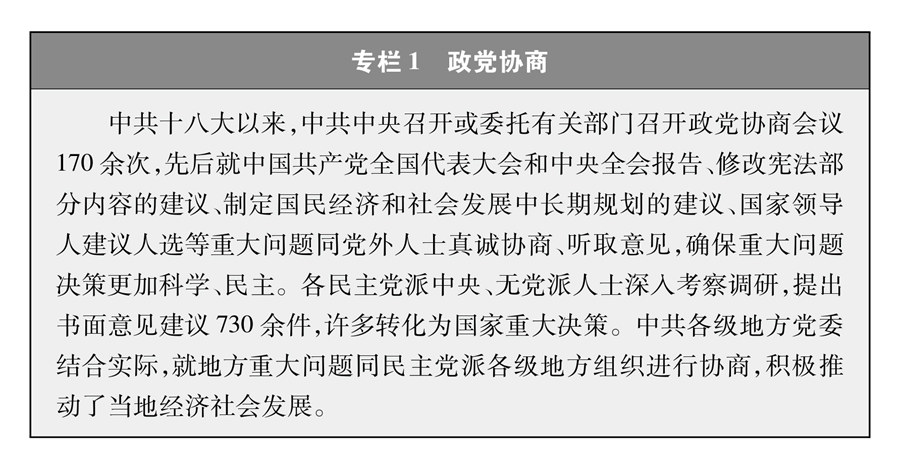
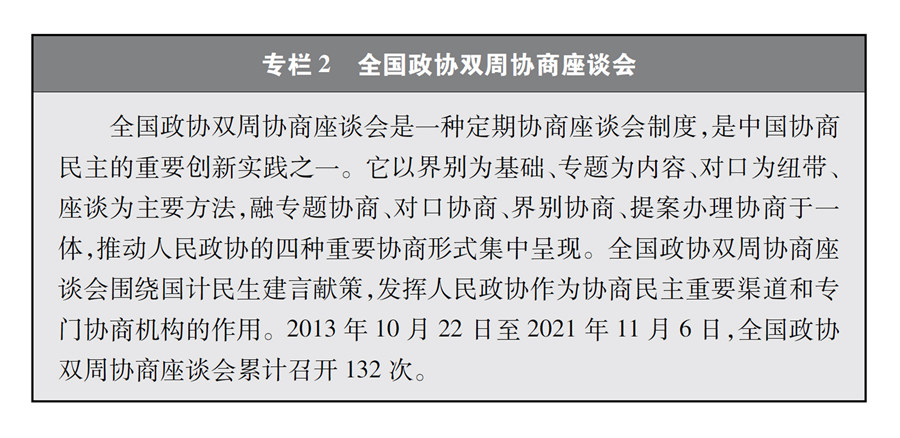
China People’s Political Consultative Conference is an important institution that implements the multi-party cooperation and political consultation system led by the Communist Party of China (CPC). As a special consultative body, the CPPCC promotes broad unity, multi-party cooperation and practices people’s democracy in consultation. It not only inherits the historical tradition, but also reflects the characteristics of the times. It fully embodies the characteristics and advantages of China’s socialist democracy, which is an important part of the national governance system and an institutional arrangement with China characteristics. On the platform of the CPPCC system, all political parties, groups and people from all ethnic groups and walks of life play a representative role among the people in various sectors. Through plenary meetings, standing committee meetings, chairmen’s meetings, special committee meetings, special consultation meetings, consultation and discussion meetings, they carry out regular work such as making proposals, inspecting members, conducting special investigations, and reflecting social conditions and public opinions. They conduct extensive consultations, equal consultations and orderly consultations on major national policies and important issues in various economic and social fields before making decisions and during their implementation. The Communist Party of China (CPC) adopted and concentrated their opinions and suggestions, and all parties, groups, people from all ethnic groups and walks of life accepted the Party’s ideas and publicized and explained the Party’s principles and policies among people from all walks of life, so as to increase trust and dispel doubts, reflect public opinion to the widest extent, brainstorm ideas to the fullest extent, build consensus to the maximum extent, and consolidate the common ideological foundation of United struggle. The plenary session of Chinese People’s Political Consultative Conference and the National People’s Congress are held at the same time every year. CPPCC members should not only discuss CPPCC issues, but also attend the National People’s Congress and participate in the revision of relevant laws.The discussion on the work report of "one government, two houses" and so on, such an institutional arrangement has truly realized that everyone is responsible and everyone supervises the government work, and has formed a "two sessions" democracy with China characteristics.
The multi-party cooperation and political consultation system led by the Communist Party of China (CPC) truly, extensively and permanently represents and realizes the fundamental interests of the overwhelming majority of the people and all walks of life in the country, effectively avoiding the disadvantages of the old-style political party system representing minorities and minority interest groups; Closely unite all political parties and personages without party affiliation and strive for common goals, effectively avoiding the disadvantages of one party’s lack of supervision or multi-party taking turns to sit in the village and vicious competition; Through institutionalized, procedural and standardized arrangements, all kinds of opinions and suggestions are concentrated to promote scientific and democratic decision-making, which effectively avoids the disadvantages of the old-style political party system that is limited by party interests, class interests, regional and group interests and leads to social tears.
(4) Consolidate and develop the broadest patriotic united front.
The United front is an important magic weapon for the Communist Party of China (CPC) to unite people and pool strength. In the practice of people’s democracy, the Communist Party of China (CPC) has always placed the United front in an important position, adhered to great unity and unity, adhered to the unity of consistency and diversity, and made overall plans to do a good job in the work of democratic parties and personages without party affiliation, intellectuals outside the party, ethnic work, religious work, United front work in the non-public sector of the economy, United front work for people of new social strata, United front work in Hong Kong, Macao and Taiwan, United front work overseas and overseas Chinese affairs. Unite all forces that can be United, mobilize all positive factors that can be mobilized, build consensus extensively, seek the greatest common denominator, draw the greatest unity, constantly promote the harmony of political party relations, ethnic relations, religious relations, class relations and compatriots at home and abroad, and maximize all the wisdom and strength of the Chinese nation.
China People’s Political Consultative Conference is an organization of Chinese people’s patriotic united front. There are 34 sectors in Chinese People’s Political Consultative Conference, which are composed of representatives from the Communist Party of China (CPC), democratic parties, personages without party affiliation, people’s organizations, ethnic minorities and all walks of life, compatriots from Hong Kong Special Administrative Region, Macao Special Administrative Region, Taiwan Province compatriots and returned overseas Chinese, and specially invited persons. There are more than 2,100 members in the first session of the 13th Chinese People’s Political Consultative Conference, among whom party member, a non-CPC member, accounts for 60.2%. This organizational structure embodies the important characteristics of great unity and unity. On the political basis of loving People’s Republic of China (PRC), supporting the Communist Party of China (CPC)’s leadership and working together to realize the great rejuvenation of the Chinese nation, it can seek common ground while reserving differences, gather differences, mobilize all positive factors to the maximum extent, unite all those who can be United, and unite the powerful forces of common unity and struggle to the maximum extent.
(5) Adhere to and improve the system of regional ethnic autonomy.
China is a unified multi-ethnic country. It is the principle and purpose of the Communist Party of China (CPC)’s ethnic policy to build a strong sense of the Chinese nation community, always maintain national integrity and unity, and realize the common unity, struggle and prosperity of all ethnic groups. The system of regional ethnic autonomy refers to a system in which, under the unified leadership of the state, regional autonomy is practiced in areas where ethnic minorities live in concentrated communities, and organs of self-government are established to exercise autonomy. The system of regional ethnic autonomy is clearly defined in the Constitution and the Law on Regional Ethnic Autonomy, and it is a basic political system in China.
The implementation of regional ethnic autonomy in China is based on territorial integrity and national unity, which embodies the combination of unity and autonomy, ethnic factors and regional factors, and fully conforms to the national conditions and reality of China. China’s regional ethnic autonomy is autonomy under the unified leadership of the state, and all ethnic autonomous areas are inseparable parts of China. The organs of self-government in ethnic autonomous areas are local governments at the first level under the leadership of the central government and must obey the unified leadership of the central government.
The implementation of regional ethnic autonomy ensures that ethnic minority citizens enjoy equal and free rights and economic, social and cultural rights from the institutional and policy levels. Among the standing committees of the people’s congresses in 155 ethnic autonomous areas, citizens of ethnic groups exercising regional autonomy are directors or deputy directors; The chairmen, governors, county heads or banners of local governments in ethnic autonomous areas are all citizens of ethnic groups exercising regional autonomy. According to the characteristics and needs of ethnic minorities, China helps ethnic minority areas to accelerate their economic and cultural development.
The system of regional ethnic autonomy has greatly enhanced the sense of pride and responsibility of the people of all ethnic groups as masters of the country, and greatly mobilized the enthusiasm, initiative and creativity of the people of all ethnic groups to create a better future and share the great glory of the Chinese nation. Under the framework of this system, the situation of great unity of the Chinese nation has been continuously consolidated, the exchanges and exchanges between people of all ethnic groups have been increasingly extensive and in-depth, the socialist ethnic relations of equality, solidarity, mutual assistance and harmony have been continuously developed, 56 ethnic groups have clung together like pomegranate seeds, and the sense of community of the Chinese nation has become increasingly solid.
(six) adhere to and improve the grass-roots mass autonomy system.
China has a large population and a wide geographical area, and there are great differences in grass-roots governance. China implements the grass-roots mass autonomy system with the villagers’ autonomy system, residents’ autonomy system and workers’ congress system as its main contents. Under the leadership and support of grass-roots party organizations, the people directly exercise their democratic rights in accordance with the law, and realize self-management, self-service, self-education and self-supervision, effectively preventing the phenomenon that the people have formal rights but actually have no rights.
Village (neighborhood) people’s autonomy. Under the leadership of grassroots party organizations, villagers (residents) set up village (residents) committees to directly exercise their democratic rights and manage grassroots public affairs and public welfare undertakings according to law. The implementation of democratic elections, by the village (neighborhood) people elected members of the village (neighborhood) committee; Democratic consultation is carried out, and the villagers (residents) take various forms to carry out consultation and deliberation; The implementation of democratic decision-making, by the village (neighborhood) people through the village (neighborhood) people’s meeting or the village (neighborhood) people’s representative meeting to make decisions on community public affairs and public welfare undertakings; The implementation of democratic management, by the village (neighborhood) people to discuss and decide the village (neighborhood) people’s autonomy regulations, village rules and regulations, residents’ conventions, etc., and self-management; The implementation of democratic supervision, by the village (neighborhood) people elected village (neighborhood) affairs supervision committee, supervision of village (community) affairs and village (neighborhood) affairs open system implementation. By the end of 2020, all 503,000 administrative villages had established villagers’ committees, and all 112,000 communities had established residents’ committees.
Employees of enterprises and institutions shall exercise their democratic rights according to law. Enterprises and institutions shall establish a democratic management system with the workers’ congress as the basic form, and employees shall play an active role in major decisions of enterprises and institutions and major issues involving the vital interests of employees; Enterprises and institutions implement the system of employee directors and employee supervisors, fully implement the system of making factory affairs public, explore the forms of leadership reception days, labor-capital talks, leadership mailboxes, etc., reflect the demands of employees, coordinate labor relations and protect the legitimate rights and interests of employees, put forward opinions and suggestions on the production and management of units, and make suggestions for the development of units. The enterprise trade union committee is the working body of the workers’ congress. At present, there are 2.809 million grass-roots trade union organizations in China, covering 6.551 million enterprises and institutions.
Grassroots democratic innovation is very active. From the village (neighborhood) people’s Council, village (neighborhood) people’s forum, democratic forum and democratic hearing in urban and rural communities to the joint participation of party representatives, deputies to the National People’s Congress and CPPCC members in the community, from "small courtyard chamber" to "bench democracy", from offline "round table meeting" to online "discussion group", China people have groped and created one after another full of fireworks in the fiery grassroots life. Through these grounded and popular democratic practices, people expressed their opinions and suggestions around practical issues involving their own interests, conducted extensive consultations, coordinated interests, effectively resolved contradictions, and promoted stability and harmony at the grassroots level. Many good experiences and practices of grassroots democracy have become national policies, which have continuously injected new impetus into the development of democracy in China.
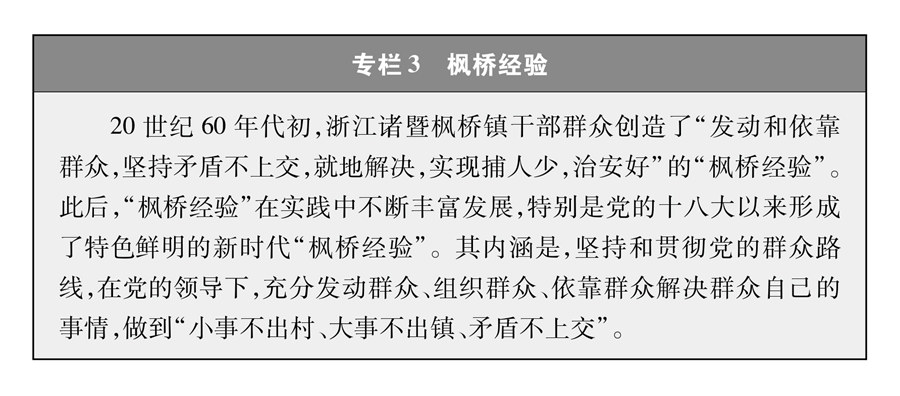
The system of grass-roots mass autonomy has enhanced the democratic consciousness and ability of the grass-roots people, cultivated their democratic habits, and fully demonstrated the universality and authenticity of democracy in China. Grass-roots mass autonomy makes all social cells active, makes "micro-governance" dynamic and more efficient, and provides a solid institutional guarantee for building a grass-roots governance community where everyone is responsible, everyone is responsible and everyone enjoys it.
Third, democratic practice with concrete reality
The whole process of people’s democracy development in China has both complete institutional procedures and complete participation in practice. The whole process of people’s democracy, combining electoral democracy with deliberative democracy, linking democratic election, democratic consultation, democratic decision-making, democratic management and democratic supervision, covers all aspects of economy, politics, culture, society, ecological civilization, etc., and pays attention to national development events, social governance difficulties and daily chores of the people. It has the continuity in time, the integrity in content, the synergy in operation, and the universality and continuity of people’s participation, which makes the country
(1) Democratic elections
It is an important form of democracy in China that the people exercise their rights through elections and voting, and choose people who represent their own wishes to master and exercise power, which is an important embodiment of the people’s realization of being masters of the country.
Elections in China are extensive, including elections for state institutions, elections for village (neighborhood) committees and elections for workers’ congresses in enterprises and institutions, covering all aspects of the country’s political and social life. Elections in China are equal, and the people’s right to vote and to be elected is fully guaranteed, with one person, one vote and equal votes; The election in China is real, not controlled by money, and voters choose people they trust according to their own wishes; Elections in China are developing, and the forms and means of elections are constantly innovating and enriching with the development of economy and society.
National institutional elections. The election of state organs refers to the election of the National People’s Congress and local people’s congresses at various levels, and the election of leaders of state organs at the same level by people’s congresses at various levels. In China, all citizens who have reached the age of 18, have People’s Republic of China (PRC) nationality and have not been deprived of political rights according to law have the right to vote and stand for election. From the National People’s Congress to the township people’s congresses, the deputies to the five-level people’s congresses are democratically elected, with a term of five years. In accordance with the principles of universality, equality, the combination of direct and indirect elections, differential elections and secret ballot, voters directly elect deputies to people’s congresses at the county and township levels, and deputies to people’s congresses at or above the county level are elected by people’s congresses at the next lower level. Leaders of state organs at all levels are elected or appointed by the people’s congresses at the same level.
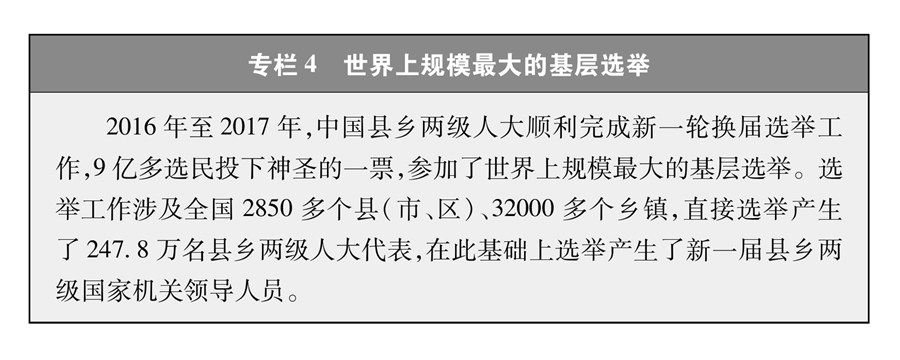
Grassroots elections. Grass-roots elections are the most extensive and vivid democratic practice in China, including the election of village (neighborhood) committees and the election of workers’ congresses in enterprises and institutions. Village (neighborhood) committees are composed of directors, vice-directors and members, and the election of village (neighborhood) committees is conducted simultaneously with the election of county and township people’s congresses. Villagers (residents) regularly elect members of village (residents) committees according to law. In enterprises and institutions, the workers’ congress is an institution where workers are masters of their own affairs and exercise democratic management power. The workers’ representatives are elected by all the workers through democratic elections.
China’s democratic elections are in line with China’s national conditions, with the development stage of China, and keep pace with the times with the economic and social development. For decades, when China timely revised the electoral law and elected deputies to the National People’s Congress, the proportion of the population represented by each representative in rural and urban areas was from 8: 1 in the early days of the founding of New China, to 4: 1 in 1995, and then to 1: 1 in 2010, gradually realizing the equal election of urban and rural population. People’s awareness of democracy has been continuously enhanced, and the participation rate has been continuously improved. Since the reform and opening up, China has successively held 12 direct elections for deputies to people’s congresses at the township level and 11 direct elections for deputies to people’s congresses at the county level, and the voter participation rate has remained at around 90%.
(2) Democratic consultation
It is the essence of people’s democracy to find the greatest common denominator of the wishes and demands of the whole society. While exercising their rights through elections and voting, the people fully consult before and during major decisions, and try their best to reach an agreement on common issues. Deliberative democracy is a unique, unique and original form of democracy in China.
Have a deep foundation. Deliberative democracy originates from the excellent political culture of the Chinese nation, such as serving the public, being inclusive and seeking common ground while reserving differences, from the realistic process of China’s political development after modern times, from the Communist Party of China (CPC)’s long-term practice of leading the people in unremitting struggle, from the great creation of political system jointly realized by all parties, groups, nationalities, strata and people from all walks of life after the founding of New China, and from China’s continuous innovation in political system since the reform and opening up, which has a profound cultural foundation, theoretical foundation, practical foundation and system.
There are a wide variety of forms. In all fields and at all levels, the people conduct extensive consultations on major issues of reform, development and stability and issues concerning their own interests through proposals, meetings, discussions, argumentation, hearings, evaluation, consultation, internet, opinion polls and other ways and means before making decisions and during their implementation. Matters involving the interests of the people of all ethnic groups throughout the country are widely discussed by all the people and the whole society; Matters involving the interests of the local people are widely discussed among the local people; Matters involving the interests of some people and specific people are widely discussed among these people; Matters involving the interests of the grassroots are widely discussed among the grassroots.
The system is constantly improving. China has continuously improved the development path of deliberative democracy, explored and formed consultation channels such as political party consultation, people’s congress consultation, government consultation, CPPCC consultation, people’s organizations consultation, grassroots consultation and social organization consultation, and promoted the extensive and multi-level institutionalized development of deliberative democracy. Political party consultation is that the Communist Party of China (CPC) conducts consultations with the democratic parties on important documents related to the National Congress of the Communist Party of China and The CPC Central Committee, revision of the Constitution, formulation and revision of relevant important laws, candidates recommended by state leaders, medium and long-term planning of national economic and social development, annual economic and social development, reform, development and stability, United front and multi-party cooperation. NPC consultation means that people’s congresses at all levels hold consultations with relevant state organs, social organizations, experts and scholars, and the masses in exercising their functions and powers according to law. Government consultation means that governments at all levels strengthen communication and consultation with NPC deputies, CPPCC members, democratic parties, personages without party affiliation, relevant people’s organizations, social organizations and representatives of the masses in performing their duties; CPPCC consultation is that under the leadership of the Communist Party of China, all political parties, groups and people from all walks of life who participate in the CPPCC perform their functions, and hold extensive consultations and reach consensus around major issues such as reform, development and stability before and during decision-making; Consultation with people’s organizations means that people’s organizations strengthen consultation with relevant government departments on practical issues involving the vital interests of the masses, especially the protection of the rights and interests of specific groups, and actively participate in consultation activities organized by the CPPCC; Grassroots consultation,It is grass-roots party organizations, grass-roots governments, grass-roots mass autonomous organizations, economic and social organizations and the masses, etc., to hold consultations on the development of grass-roots society and issues concerning the vital interests of the masses; Consultation with social organizations means that all kinds of social organizations actively carry out and participate in consultations on better serving the society. These seven consultation channels have greatly enriched the forms of democracy, broadened the channels of democracy and deepened the connotation of democracy.
China’s deliberative democracy promotes the full expression and in-depth exchange of different ideas and opinions, achieves mutual respect, equal consultation without imposing on others, follows rules, negotiates in an orderly manner without saying anything, is considerate and tolerant, negotiates sincerely without being extreme and paranoid, and forms a good negotiation atmosphere of speaking freely, expressing one’s own opinions, being rational and legal, fully developing the spirit of democracy and widely condensing the consensus of the whole society.
(3) Democratic decision-making
Democratic decision-making is an important part of people’s democracy in the whole process. Good decisions reflect people’s wishes, safeguard people’s rights and interests and enhance people’s well-being. In China, it is normal to observe people’s feelings, listen to people’s voices, conform to people’s opinions, and pool their wisdom. More and more voices from the grassroots go directly to decision-making levels at all levels, and more and more opinions of the masses are transformed into major decisions of the party and the government.
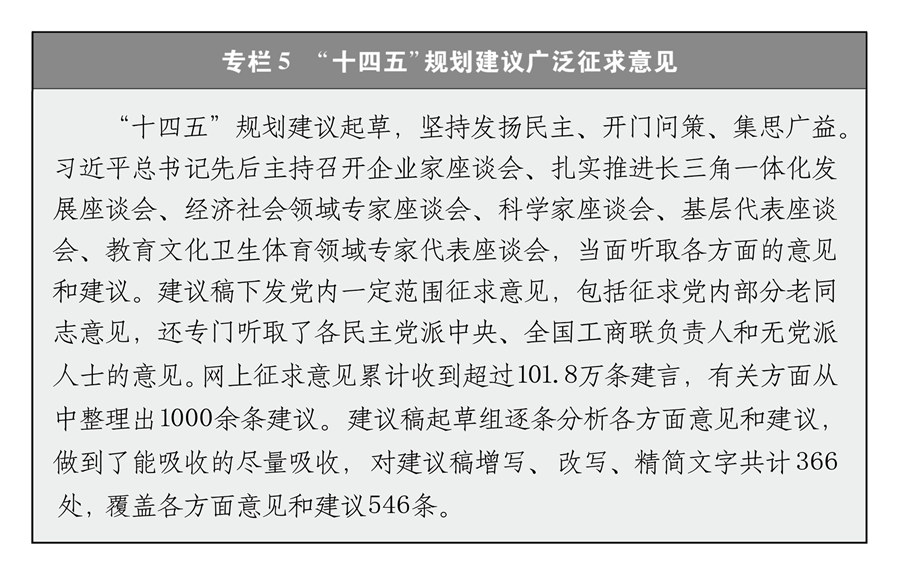
The National People’s Congress "opens the door to legislation". People’s congresses at all levels and their standing committees insist on legislating for the people and democratically, ensure people’s participation in legislative activities through various channels, and strive to make every legislation reflect the people’s wishes and win their support. To establish a legal project, we should listen to opinions widely by holding symposiums, hearings and demonstration meetings, so that the people’s will can be reflected in the initial stage of legislation; Draft laws, listen to public opinions and professional suggestions extensively, and explore entrusting a third party to draft laws and regulations, so that people’s demands can be fully reflected; The draft law was published and widely solicited opinions from all walks of life through the internet and news media. Grassroots people directly participate in the drafting of draft laws, legislative investigation, revision and demonstration, post-legislative evaluation and other links through grassroots legislative contact points.
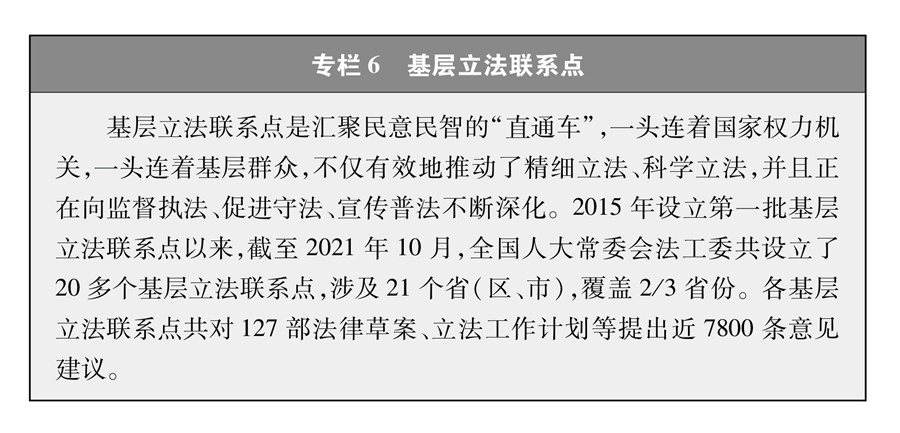
The government "opens the door to ask for advice." People’s governments at all levels fully listen to the opinions of all parties on the major decisions to be implemented and the major decision-making suggestions put forward by all parties, and ensure the people to participate in decision-making through various channels and forms. In the process of decision-making, NPC deputies and CPPCC members put forward suggestions through suggestions and proposals, citizens, legal persons and other organizations put forward written suggestions, and decision-making organs start the decision-making process; In the process of decision-making research and formulation, opinions and suggestions from all walks of life, especially those directly related, are widely listened to through forums, public comments, hearings, questionnaires and field visits; In the publicity of the draft decision, the draft decision and its explanatory materials are published through government websites and various media; In the final decision-making process, decisions are made on the basis of collective discussion in accordance with the principle of democratic centralism; In the post-decision evaluation stage, listen to the public’s opinions, and absorb NPC deputies, CPPCC members, people’s organizations, grassroots organizations, social organizations and experts to participate in the evaluation.
The broad masses participate in grassroots decision-making. Grassroots people put forward opinions and suggestions on major issues in grassroots governance, such as economic and social development, infrastructure construction, comprehensive social management, grassroots cultural services, ecological environment protection, and the formulation of autonomous regulations, through village (neighborhood) people’s meetings, village (neighborhood) people’s representative meetings, and village (neighborhood) people’s group meetings, and participate in decision-making and implementation.
(D) Democratic management
People’s affairs are managed by the people, and people’s affairs are run by the people. In China, the broad masses of people carry forward the spirit of ownership, give full play to the main role, actively exercise democratic rights, and manage state affairs, economic and cultural undertakings and social affairs through various channels and forms.
Participate in the management of national political life and social life. The people exercise the rights conferred by the Constitution and assume the responsibilities and obligations conferred by the Constitution on citizens. They actively participate in elections, consultations, decision-making and supervision, and participate in the management of the country’s political life and social life at all levels and in all fields. The right to know, participate, express and supervise is strongly guaranteed.
Democratic management of urban and rural communities. According to the constitution, laws and relevant regulations, rural and urban community residents, in combination with local conditions, shall discuss and formulate village (neighborhood) residents’ autonomy regulations, village rules and regulations, residents’ conventions, etc., and clearly define the rights and obligations of village (neighborhood) residents, the relations and working procedures among various organizations in the village (community), as well as economic management, social security, fire safety, environmental sanitation, marriage and family, neighborhood relations, and so on.
Democratic management of enterprises and institutions. More than 150 million market players in China are self-managed, self-managed and dynamic generate, carrying more than 700 million jobs, which has promoted the steady growth of China’s economic aggregate, national financial resources and social wealth. According to the Constitution, laws and relevant regulations, enterprises and institutions have generally established a democratic management system with the workers’ congress as the basic form and the factory affairs publicity system, the workers’ director system and the workers’ supervisor system as the main contents. Through these democratic management systems, employees participate in the management of enterprises and institutions, safeguard the legitimate rights and interests of employees in the unit, and realize the consultation, mechanism construction, benefit creation and benefit sharing between the unit and employees. At present, there are 3.144 million enterprises that have established workers’ congresses, among which 2.938 million are non-public enterprises, accounting for 93.4%.
Democratic management of social organizations. Social organizations, such as social organizations, foundations and social service institutions, generally formulate articles of association, strengthen the management of their members, carry out activities independently, concentrate on organizing the opinions and suggestions of their members or clients, actively participate in the governance of social public affairs in an organized way, and play a democratic management role in the fields of industry self-discipline, social services and charity. By November 2021, civil affairs departments at all levels had registered more than 900,000 social organizations, including 2,284 national social organizations. Various forms of social organizations have become an important field of people’s democratic management.
(5) Democratic supervision
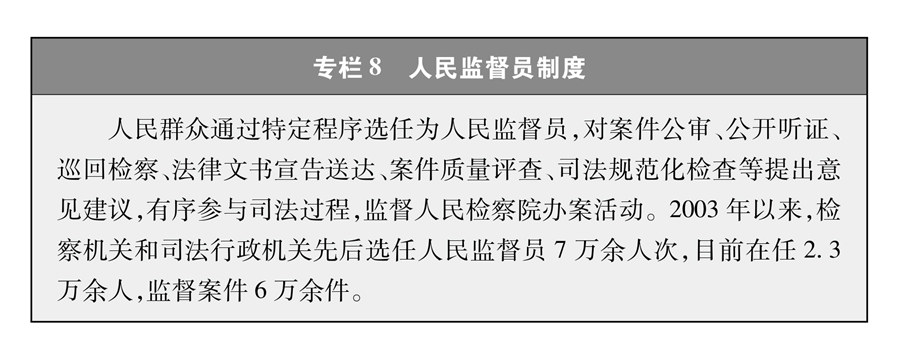
Comprehensive and effective democratic supervision ensures that the people’s democratic rights will not be interrupted by the end of the election and that the use of power will be effectively restricted. In China, the problem of abuse of power and abuse of power for personal gain cannot be solved by the so-called rotation of political parties and separation of powers, but by scientific and effective democratic supervision. China, in combination with its own reality, has explored and constructed a set of organically integrated and coordinated supervision system, and formed a supervision network with scientific configuration, coordinated powers and responsibilities and efficient operation, and the supervision of power has gradually extended to every field and corner.
Supervision by people’s congress. The people’s congresses give full play to their role and supervise the implementation of constitutional laws and major decision-making arrangements. People’s congresses at all levels and their standing committees strengthen supervision over the law enforcement, supervision and judicial work of "one government, one committee and two houses" to ensure the effective implementation of laws and regulations and the correct exercise of administrative power, supervision power, judicial power and procuratorial power. The people actively participate in the supervision of the people’s congresses through "open-door supervision" forms such as NPC deputies’ symposiums, grassroots mass symposiums, questionnaires and online surveys.
Democratic supervision. The Communist Party of China (CPC) supports democratic parties and personages without party affiliation to carry out democratic supervision by putting forward opinions, criticisms and suggestions on the basis of adhering to the Four Cardinal Principles, participating in the supervision and inspection of the implementation of major principles and policies and decision-making arrangements of the Party and the state, and conducting special supervision on major issues entrusted by the Party Committee. In various activities organized by the CPPCC, all parties, groups and people from all ethnic groups and walks of life focus on the implementation of the major principles, policies and important decision-making arrangements of the party and the state in accordance with the articles of association of the CPPCC, and conduct consultative supervision by putting forward opinions, criticisms and suggestions to help the party and the government solve problems, improve their work, enhance unity and gather together.
Administrative supervision. State administrative organs shall, in accordance with the statutory authority, procedures and methods, supervise their own organizational behavior and administrative behavior, including top-down, bottom-up and mutual supervision by administrative organs.
Supervision and supervision. Supervisory organs shall perform their supervisory duties according to law, supervise and inspect the political conduct, exercise of public power and moral integrity of public officials, and urge relevant organs and units to strengthen the education, management and supervision of their public officials.
Judicial supervision. Judicial organs and procuratorial organs shall supervise the public power of the state authorized by the people in accordance with their statutory functions and procedures. Judicial supervision is the most compulsory supervision mechanism in the supervision system of the party and the state, and it is the "last line of defense" for the party and the state to use supervision means to safeguard the correct exercise of public power.
Audit supervision. Audit institutions shall, in accordance with the law, conduct audit supervision over the implementation and final accounts of budgets and other financial revenues and expenditures of various departments at the same level and governments at lower levels.
Accounting supervision. The financial department shall supervise the implementation of laws, administrative regulations and departmental rules on financial, financial and accounting management according to the authorization of the law.
Statistical supervision. Statistics departments and relevant organs responsible for statistical investigation shall supervise all organizations and personnel who exercise statistical power and have statistical obligations, prevent and punish statistical fraud and fraud, ensure that statistical data are true, accurate, complete and timely, and provide solid statistical guarantee for economic and social development.
Mass supervision. Citizens, legal persons or other organizations, through various means, supervise the performance of duties by state organs at all levels and their members. They can not only apply for administrative reconsideration and bring an administrative lawsuit according to law, but also have the right to report to the supervisory organ that the monitored object fails to perform his duties according to law, violates the provisions of fair use, honest political career and ethics, and is suspected of violating the law and committing crimes by taking advantage of his position.
Supervision by public opinion. The media give full play to the role of public opinion supervision, and timely expose the abuse of public rights, dereliction of duty and other acts. With the rapid development of the Internet, people make more use of platforms such as the Internet to put forward opinions, suggestions and criticisms to state organs and public officials at all levels, and the Internet plays an increasingly important role in public opinion supervision.
Fourth, democracy that is widely and truly effective
Complete institutional procedures and participation in practice make the whole process of people’s democracy change from value concept to institutional form, governance mechanism and people’s lifestyle rooted in China. The people are the masters of the country, which is embodied concretely and realistically in the policies and measures of the party governing the country, in the work of the party and state organs in all aspects and at all levels, and in the work of realizing the people’s yearning for a better life. The sunshine of democracy shines on China, and the people of China enjoy extensive, full, true, concrete and effective democracy.
(1) People enjoy a wide range of rights.
According to the Constitution of China, all power of the state belongs to the people; The people manage state affairs, economic and cultural undertakings and social affairs through various channels and forms in accordance with the law. China’s political power is not distributed according to status, wealth or relationship, but enjoyed by all people equally. State power is not for the capital, but for the people.
China implements the socialist basic economic system with public ownership as the main body, multiple ownership economies developing together, distribution according to work as the main body and multiple modes of distribution coexisting, and the socialist market economic system. The lifeline of the national economy is firmly in the hands of the people, and the people are masters of the country with a solid economic foundation and material guarantee.
In China, people enjoy the right to vote and stand for election in accordance with the law, the right to know, participate, express and supervise state and social affairs, the right to criticize and make suggestions to any state organ or functionary, and the freedom of speech, publication, assembly, association, procession, demonstration and religious belief. People not only widely participate in the management of state, social affairs and economic and cultural undertakings, but also fully exercise their democratic rights in daily life. Everyone has multiple democratic roles and enjoys corresponding democratic rights.
In China, human rights are fully respected and effectively guaranteed. People’s happy life is the greatest human right. China’s economy has maintained a long-term, stable and rapid development, and people’s lives have improved significantly. China has built the largest social security system in the world, with basic medical insurance covering more than 1.3 billion people and basic old-age insurance covering more than 1 billion people. China has built a well-off society in an all-round way, and more than 1.4 billion people have completely shaken off absolute poverty and are moving towards common prosperity. China people’s sense of acquisition, happiness and security has been continuously improved, their rights to subsistence, development and health have been fully guaranteed, and their economic, political, cultural, social and environmental rights have been continuously developed.
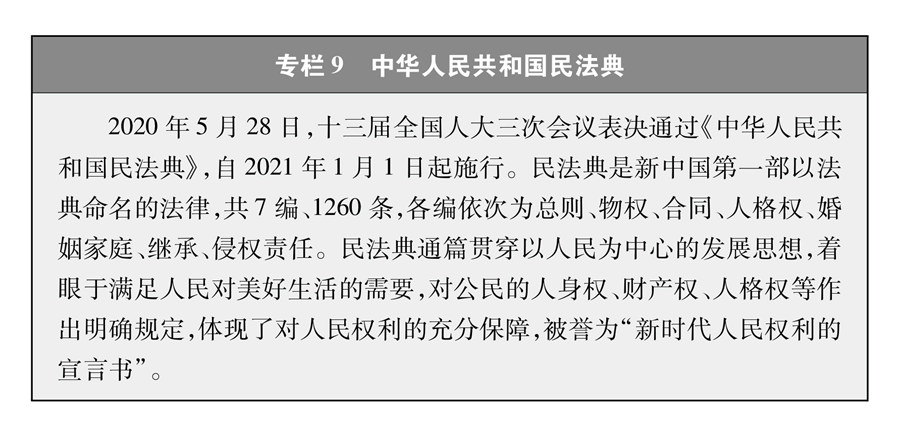
The rights enjoyed by the people of China have been continuously enriched and developed. Since the founding of New China, we have sought survival and development on the basis of political and economic equality, pursued both material prosperity and spiritual prosperity after the reform and opening up, won the tough battle against poverty in the new era, built a well-off society in an all-round way, solidly promoted common prosperity, and achieved major strategic achievements in fighting the COVID-19 epidemic. The connotation and extension of the rights enjoyed by the people of China have been continuously enriched and expanded, and they are constantly moving towards the all-round development of human beings.
(2) People’s democratic participation has been expanding.
People only wake up when they vote and go into hibernation after voting. Only when they listen to hype slogans during the election, they have no right to speak after the election. Only when they are favored when they canvass and left out after the election, such democracy is not real democracy. In China, the concept of democracy is deeply rooted in people’s hearts, people’s democratic participation is extensive and sustained, democratic practice is deeply integrated into people’s daily work and production and life, democracy has become a common practice, and society is full of vitality.
The people’s willingness to participate in democracy is constantly increasing, and the breadth and depth of participation are constantly expanding. People participate in the management of state and social affairs as well as economic and cultural undertakings; Participate in the consultation of opinions and suggestions on the top-level design of national development, and participate in the governance of local public affairs; Participate in democratic elections, democratic consultations, democratic decision-making, democratic management and democratic supervision; Express their wishes through channels such as the National People’s Congress and the Chinese People’s Political Consultative Conference, and express their demands through social organizations and networks. From "counting peas" to electronic voting, from people running errands to "data running", the forms of democratic participation are constantly innovating and the channels are constantly expanding. People’s participation runs through what the party and the state want to do, how to do it and how to do it.
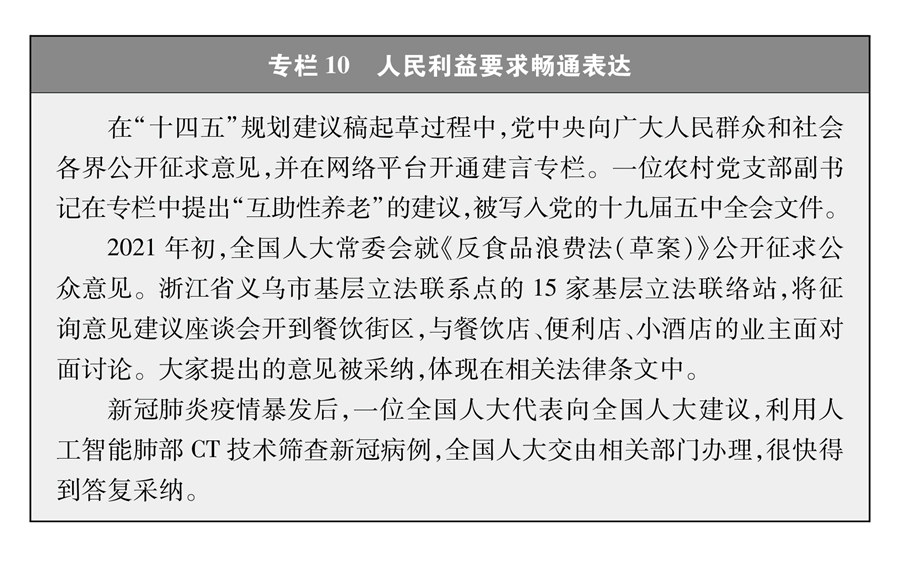
People’s interests can be expressed smoothly and realized effectively. Democracy begins with the full expression of the people’s will and is implemented in the effective realization of the people’s will. The will of the people can only be expressed, but not realized, and it is not a true democracy. In China, people’s expectations, hopes and demands, from national policies to social governance, to people’s food, clothing, housing and transportation, have been talked about in some places, listened to and given feedback. The wishes and voices of the people have become the principles and policies of the party and the state through democratic decision-making procedures, and they have been closely coordinated and implemented at all levels of the central government, provinces, cities, counties and towns, and have been transformed into concrete practices to realize the people’s wishes through the division of labor and coordination among various functional departments, and through the mutual cooperation and organic connection of decision-making, implementation, inspection, supervision and accountability. For practical problems involving their own interests, people put forward their opinions and demands through petition platforms, leadership mailboxes, government hotlines, and online "message boards", and they can get timely feedback and response.
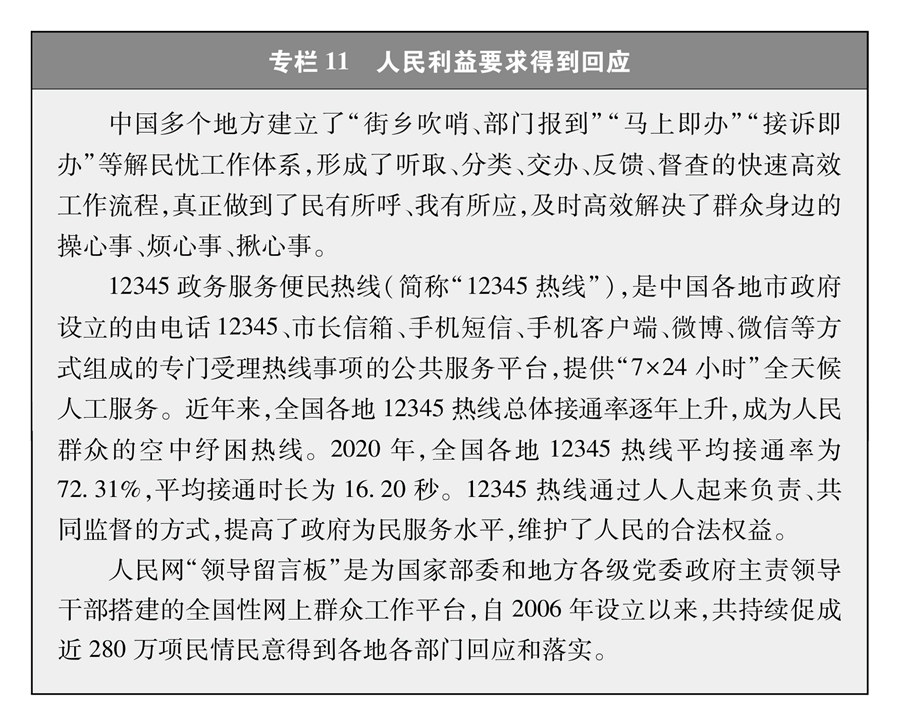
(C) efficient state governance
Democracy is closely related to national governance. The development of democracy and the modernization of state governance go hand in hand, interact and promote each other. There is no "failure" or "inefficiency" in state governance, and domestic problems are piling up, but democracy is an absurd phenomenon of "world model". Good democracy must achieve good governance and promote national development.
The high quality of democracy in China has promoted the high efficiency of state governance and improved the modernization level of state governance system and governance capacity. China’s democracy has fully demonstrated the people’s dominant position and greatly enhanced their sense of ownership. The people are both participants and beneficiaries of democracy, and their wisdom is fully stimulated, striving for themselves as well as the country and nation. Democracy in China has effectively regulated national political relations, developed vibrant political party relations, ethnic relations, religious relations, class relations, and compatriots at home and abroad, enhanced national cohesion, avoided involvement to the maximum extent, effectively prevented the phenomenon of mutual restraint and serious internal friction, and formed a stable and United political situation and a strong joint force of unity officials. China’s democracy has closely integrated the Party’s ideas, the will of the state and the will of the people, making the Party, the state and the people a whole with the same goal, consistent interests, mutual blending and the same direction, generating great coupling force, forming an institutional advantage of concentrating on doing great things, effectively promoting the liberation and development of social productive forces, promoting various undertakings of modernization, and promoting the continuous improvement of people’s quality of life and level. Democracy in China has always put the interests of the people of China first, effectively safeguarded national independence, national sovereignty, security and development interests, and effectively safeguarded the well-being of the people of China and the Chinese nation.
Since the founding of New China more than 70 years ago, the Party has United and led the people, constantly overcoming all kinds of difficulties and obstacles that are rare in the world, successfully stepping out of the Chinese-style modernization road, and achieved remarkable development achievements. China’s economic strength, comprehensive national strength and people’s living standards have been significantly improved. For China, the largest developing country with a large population and a large volume, and its per capita resource endowment is at a low level in the world, it is impossible to achieve such development without the people’s status and spirit of ownership and the United struggle of hundreds of millions of people. Democracy in China truly puts development for the people, development depends on the people, and the fruits of development are shared by the people, and fully mobilizes the people’s subjective initiative. This is the "password" of the rule of China and the strength of democracy in China.
(D) Social harmony and stability
Democracy is the product and symbol of the progress of human society. To develop democracy, we should push the society forward in the direction of freedom, equality, justice, civilization, unity and harmony. Good democracy should unite social consensus, not cause social tears and conflicts; Social fairness and justice should be maintained, rather than leading to the solidification of social classes and interests; We should maintain social stability and order, not bring chaos and turmoil; Society should be filled with positive energy towards beauty and goodness, not with negative energy of falsehood, ugliness and ugliness.
China’s national conditions are complex, and the difficulty of governance is rare in the world. People’s democracy in China realizes the coordination and unification of the will and interests of all parties, and the unity of all parties on the basis of common thoughts, common interests and common goals. The people live and work in peace and contentment, feel comfortable, and the society is harmonious, stable and full of vitality. China has gone through the industrialization process that western developed countries have gone through for hundreds of years in decades. In the drastic social changes, there is no social turmoil that is easy to occur in the modernization process of late-developing countries, which not only creates a miracle of rapid economic development, but also creates a miracle of long-term social stability. The people of China have experienced the greatest development of individual freedom in thousands of years’ history. Their thoughts can be freely expressed, people can freely move, and hundreds of millions of people’s sources of innovation are fully flowing and their creativity is competing for generate. In today’s China, people freely shuttle between urban and rural areas and between cities; 16,000 enterprises are born every day; One billion netizens know, communicate and express their views through the Internet … … China’s society is open and free, but it has always maintained social unity, harmony, stability and order. People’s democracy is not only the propeller of social progress in China, but also the lubricant of social progress in China.
(5) The use of power has been effectively restricted and supervised.
Power is a "double-edged sword". Only when power operates under effective restriction and supervision can democracy be realized and the people benefit. If power loses its restriction and acts recklessly, it will inevitably undermine democracy and endanger the people. China constantly strengthens the restriction and supervision on the operation of power, and always insists that public power is the surname of the public, and always insists that power is used by the people to ensure that the power entrusted by the people is always used to seek happiness for the people.
Put power in the cage of the system. To strengthen the restriction and supervision of power, the system is fundamental, overall, stable and long-term. Continue to promote the rule of the party, continue to promote the rule of law, the rule of law, the administration according to law, set power according to law, standardize power, restrict power, supervise power, and let power run in the sun. Improve the system of laws and regulations within the Party, and strictly observe the discipline rules, so that Party organizations at all levels and cadres in party member can operate within the scope of discipline rules. The tenure system for leading cadres was widely implemented, which realized the orderly replacement of state organs and leadership. Strengthen the management of leading cadres, especially senior leading cadres, strictly regulate work and living conditions, and resolutely prevent the formation of privileged classes. Improve the supervision system of the party and the state, adhere to and improve the supervision system of the party and the state, improve the system of openness in party affairs, government affairs, justice and various fields, ensure that the leading organs and personnel of the party and the state work within the statutory "power list" and "responsibility list" and in accordance with legal procedures, and prevent power derailment and personal rent-seeking to the maximum extent.
Resolutely oppose and punish corruption. Corruption is the enemy of people’s democracy. With a clear-cut attitude of "offending thousands of people and not shouldering 1.4 billion", China has unswervingly pushed forward the anti-corruption struggle. Adhere to systematic treatment, treat both the symptoms and the root causes, do not dare to rot, do not rot, and do not want to rot, and punish shock, institutional constraints, and raise awareness. Adhere to anti-corruption, no restricted area, full coverage, zero tolerance, heavy containment, strong pressure, long-term deterrence, persistent investigation of bribery, persistent investigation of cases, punishment of corruption, determination to cure the disease with strong drugs and severe punishment, courage to scratch the bones and cure the poison, and perseverance to "shoot tigers", "shoot flies" and "hunt foxes" with thunder. China not only has a clear-cut attitude, but also has practical actions to solve the problem of corruption, which is a chronic disease in governing the country at all times and at all times.
Judging whether a democratic form is good or not, practice is the most convincing and people have the most say. In the final analysis, it depends on whether people can live a good life. Whether democracy in China works or not depends on whether the people in China are satisfied or not, and whether the people in China support it or not. Statistics show that in recent years, China people’s satisfaction with the China government has remained above 90% every year, which is the truest reflection of the strong vitality of China’s democracy. China’s road to democracy works well, and the people of China will firmly follow this road.
Fifth, enrich the form of human political civilization
Democracy is a political form formed by human society after thousands of years of exploration, which has played an important role in the process of human development. However, since the 20th century, in the turbulent tide of democratization, some countries have stagnated, some countries have fallen into turmoil, and some countries have fallen apart. Today’s world is faced with both "excess democracy" and "democratic overspeed", as well as "democratic deficit" and "democratic eclipse". What happened to democracy? Does democracy still work? Answering "the question of democracy" and clearing up "the myth of democracy" are related to the peaceful development of the world and the future of human civilization. The setbacks and even crises of democratization in some countries are not the fault of democracy itself, but the deviation of democratic practice.
Democracy in China has gone through a hard course of choice, exploration, practice and development. China develops people’s democracy in the whole process based on its national conditions, which not only has distinctive China characteristics, but also reflects the common pursuit of democracy by all mankind. It not only promoted the development of China and the rejuvenation of the Chinese nation, but also enriched the form of human political civilization.
(A) to explore new paths for the development of human democracy.
In the process of modernization, it is extremely important and difficult for a country to realize the benign interaction between democratic development, political stability and social progress.
China’s modernization did not follow the old western road, but created a Chinese modernization road; Instead of copying the western democratic model, we created Chinese democracy. More than 1.4 billion people in China, accounting for nearly one-fifth of the world’s population, have truly become masters of their own affairs and enjoyed a wide range of rights and freedoms, which has boosted the confidence of developing countries in developing democracy and explored a new path for the development of human democracy. This is China’s great contribution to human political civilization and great progress of human society.
The people are masters of their own affairs, which is the initial heart of democracy in China. In the process of developing democracy, China has also gone through detours and encountered setbacks, but it has always adhered to its original intention, never wavered, never deviated or changed. In today’s China, the connotation of people being the masters of the country is constantly enriched, the channels are constantly broadened, the efficiency is constantly improved, and China’s democracy is constantly advancing.
Establishing a correct view of democracy and persisting, developing and innovating consistently is the first priority of developing democracy and the "master key" and "master switch" of realizing democracy. True democracy, good democracy, to make the people the masters of the country, the people not only have the right to vote and vote, but also have the right to participate extensively; Not only can you express your wishes, but you can also achieve them effectively; Not only promote national development, but also share the fruits of development.
(B) Take the road of democratic development in line with national conditions.
Democracy is diverse, and there is not only one way to realize it. Different countries have different historical cultures and realistic national conditions, so the choice of democratic forms is bound to be different. Copying the democratic model of other countries will inevitably lead to acclimatization, ills, and even political turmoil, social unrest and people’s displacement.
For a big country like China, it is very important to choose what kind of democratic development path. China pays attention to absorbing and drawing lessons from all the beneficial achievements of human political civilization, but never copies the democratic models of other countries; We welcome all useful suggestions and well-meaning criticisms, but we will never accept the bossy preaching like a "teacher". Adhering to the design and development of China’s democracy according to the characteristics of China and the reality of China, and unswervingly taking the road of democratic development in line with national conditions is a basic experience of China’s democratic development.
In developing democracy in China, we always base ourselves on the basic national conditions of large population and weak foundation, correctly grasp the relationship between democracy and development, always regard development as the top priority, promote national development with democracy, promote democracy on the basis of national development, and never leave development to talk about democracy; Always inherit 5,000 years of Chinese civilization and pay attention to drawing wisdom and nutrients from Chinese excellent traditional culture; Always accurately grasp the historical stage in which China is located, closely combine the level of economic and social development to promote democracy, actively and steadily strive for progress, not aim too high, not rush to achieve success, and not make subversive mistakes; Always adhere to the problem orientation, constantly find problems and be good at solving them. Every time a problem is solved, the democratic construction will be pushed forward and the democratic system will be more mature and stereotyped.
There is no identical political system in the world, and there is no political system model suitable for all countries. Each country should choose a democratic form that conforms to its own modernization development according to its own characteristics, and learn from it instead of copying it. What is suitable is the best. Only democracy that takes root in its own soil and absorbs abundant nutrients can continue to develop and improve, and it is the most reliable and effective. External interference and so-called "democratic transformation" have caused endless harm. China does not seek to export China’s "democratic model", nor will it accept any attempt by external forces to change China’s institutional model. China firmly supports countries to choose their own path of democratic development, and opposes external forces to interfere in other countries’ internal affairs under the pretext of "democracy".
(3) Promoting the democratization of international relations
Democracy is reflected in the fact that the people are the masters of their own country, and it is reflected in the democratization of international relations between countries. The dignity of a country should be respected, and its sovereignty, security and development interests should not be violated. It is anti-democratic to judge other countries by their own standards and even force them to copy their own political system and democratic model through the color revolution and the use of force.
China is a loyal pursuer, an active promoter and an exemplary practitioner of democracy. It not only actively develops people’s democracy at home, but also vigorously promotes the democratization of international relations internationally. In the face of the unprecedented changes in the world in the past century, China holds high the banner of peace, development, cooperation and win-win, puts forward the concept of building a community of human destiny, and promotes the construction of a new type of international relations featuring mutual respect, fairness, justice and win-win cooperation. In the face of global competition in the fields of economy, science and technology, China regards each other not as rivals, but as partners; Instead of engaging in cold war and confrontation, control and manipulation, we should promote exchanges and cooperation and achieve mutual benefit and win-win results. China actively develops global partnership, builds a framework of relations between major powers with overall stability and balanced development, deepens its relations with neighboring countries in accordance with the concept of sincerity and tolerance, and the neighboring foreign policy of being a good neighbor and partner, and strengthens unity and cooperation with developing countries by adhering to the correct concept of justice and interests and the true concept of sincerity. China has promoted the joint construction of the Belt and Road Initiative, strengthened exchanges and cooperation with other countries, and shared development opportunities. The Belt and Road Initiative has become a popular international public product.
In today’s world, democracy, equality, fairness and justice are far from being realized. A few countries ignore international axioms, trample on international norms, violate international public opinion, openly infringe on other countries’ sovereignty, interfere in other countries’ internal affairs, and bully the small and bully the weak at every turn, turning the "global village" into a primitive jungle where the law of the jungle prevails. In the face of a challenging world, all countries should vigorously promote the spirit of democracy, regardless of size, strength, wealth, and equality in international relations. A big country should look like a big country, take the future and destiny of mankind as its priority, and shoulder greater responsibility for world peace and development, instead of relying on its strength to be self-centered and bullying. The destiny of the world should be shared by the people of all countries, international rules should be jointly formulated by all countries, global affairs should be jointly governed by all countries, and the fruits of development should be shared by all countries.
(4) Strengthen exchanges and mutual learning among civilizations.
There are many ways to achieve democracy, and it is impossible to be uniform. The real obstacle to the cause of human democracy is not the difference of democratic models, but the arrogance, prejudice and hostility to other countries’ democratic exploration, and the "self-respect" of imposing their own democratic models on others. The colorful garden of human political civilization is precisely because different civilizations have their own merits. Countries should adhere to the principle of equality and non-discrimination, respect each other’s democratic model, devote themselves to their own exploration and strengthen exchanges and mutual learning; It is both beautiful and beautiful, and jointly promotes the development of human civilization.
"One person, one vote" is a form of democracy, but it is by no means the only and all of democracy. For a long time, the original meaning of democracy has been alienated and distorted by a few countries, and western electoral systems such as "one person, one vote" and political party competition have been packaged as the only standard of democracy. A few countries use democracy as a political tool, interfere in other countries’ internal affairs, infringe on other countries’ sovereignty and serve their own political purposes with the hegemonic thinking of being right with me or wrong with me, incite confrontation and division in the world under the banner of democracy, aggravate international tensions and become a source of chaos in the world. If human civilization wants to move forward, and all countries want to achieve peaceful coexistence and common development, we must explore the true meaning of democracy and polish it.
Political party is an important subject in modern state governance and an important force to promote the progress of human society. In the historical trend of the development of human civilization, political parties in all countries should take the responsibility of leading and promoting the development of human democracy in a highly responsible attitude towards the future and destiny of mankind, be people-oriented, open and inclusive, seek common ground while reserving differences, respect each other, and better realize their own democratic development and people’s happiness. The Communist Party of China (CPC) is willing to continue to work with political parties and organizations in other countries to deepen exchanges, strengthen mutual learning and jointly promote the development and progress of human society.
Concluding remarks
Democracy is not the best, only better. Mankind’s exploration and practice of democracy is endless.
China’s democratic development has made remarkable achievements. At the same time, compared with the new requirements of modernization and the people’s new expectations for democracy, China’s democracy needs to be continuously developed and improved. On the new journey of building a socialist modern country in an all-round way, the Communist Party of China (CPC) will continue to hold high the banner of people’s democracy, always adhere to the people-centered development thought, unswervingly promote people’s democracy throughout the process, realize new development of democracy in the continuous promotion of all-round development of people and common prosperity of all people, and make the tree of democracy deeply rooted and evergreen forever.
Today’s world is in a great change that has never happened in a century. It is full of opportunities and hopes, as well as risks and challenges. Only by respecting the democratic road independently chosen by the people of all countries, persisting in peaceful development, safeguarding fairness and justice, expanding democracy and freedom, and enhancing people’s happiness, can we gather the strong synergy of the development of human civilization and move towards a better tomorrow together.
Civilization is colorful because of communication, and civilization is enriched because of mutual learning. The people of China are willing to work with people all over the world to promote the common values of peace, development, fairness, justice, democracy and freedom, and to jointly enrich and develop human political civilization and build a community of human destiny in the spirit of mutual respect and seeking common ground while reserving differences.
(Note ①) Eight democratic parties include: Revolutionary Committee of Chinese Kuomintang (hereinafter referred to as "Revolutionary Committee"), China Democratic League (hereinafter referred to as "NLD"), China Democratic National Construction Association (hereinafter referred to as "Democratic Progressive Party"), China Democratic Party of Peasants and Workers (hereinafter referred to as "Democratic Party of Peasants and Workers") and china zhi gong party (hereinafter referred to as "Zhi Gong Dang").
(Note 2) Before the founding of New China, the Communist Party of China (CPC) carried out extensive democratic election activities in the vast rural areas in the anti-Japanese base areas and liberated areas. At that time, the vast majority of farmers were illiterate. In order to enable them to participate in the election, the Communist Party of China (CPC) used many creative methods, among which the most famous one was "bean election", that is, beans were used instead of votes. Voters only had to put beans in the bowl representing the candidates they wanted to choose, and ultimately who was elected was determined by the number of beans in the bowl. At that time, many places circulated such a ballad: "Jin Doudou, Yindoudou, Doudou can’t vote casually; Choose good people, do good things, and throw them into the bowl of good people. "